


Too often, defence has been the SNP’s most awkward policy subject: discussed when unavoidable and rarely on the party’s own terms. It surfaces in moments of crisis or controversy – a war, a procurement row, political spats between Edinburgh and London or a media story that can’t be ignored – which means it is usually handled reactively, almost always defensively, and then returned quietly to the box marked “reserved”.
This is not because defence and security are irrelevant to Scotland. Quite the opposite. It is because the SNP has rarely seen defence as a natural part of its policy offer. Health, welfare, climate – these are areas where the party is instinctively comfortable. We shape arguments, contest ideas and seek to lead the debate on our own terms. On defence, we have allowed the assumption to take hold that it sits outside our comfort zone, best left alone unless circumstances force our hand.
But today’s world is no respecter of comfort zones.
What has shifted most starkly in recent years is not just the scale of global instability, but the assumptions we once relied upon to manage it. Poland’s Prime Minister, Donald Tusk, captured Europe’s security paradox neatly when he told his parliament that “500 million Europeans are asking 300 million Americans to defend them against 140 million Russians”. Make it make sense, as the kids would say.
The days when Europe could outsource much of its security to the United States are over. Even if the next occupant of the White House is a Democrat or a more traditional Republican, there is no guarantee that swing voters in Ohio or Michigan will not deliver another MAGA-style president in the years that follow. America’s trajectory has changed on both sides of the political aisle. What was once a workable arrangement no longer is.
If there were any lingering doubts about the seriousness of Washington’s pivot – something many first glimpsed at last year’s Munich Security Conference – they should have been dispelled by Trump’s recent speech to the World Economic Forum in Davos, and the new US National Security Strategy, published at the end of 2025. The message is blunt. Europe is no longer a central strategic concern. Viewed from 1600 Pennsylvania Avenue, the continent is but one variable among many in a wider set of global priorities – and that’s putting it charitably.
Recent anxieties around Greenland have brought this uncomfortably home to Scotland’s own strategic neighbourhood. When sovereignty and geography in the North Atlantic become transactional talking points between close allies, it tells us something unavoidable: European security no longer sits at the centre of American decision-making in the way it once did. That shift did not begin with Donald Trump, and it will not end with him. These are deeper structural changes in American politics that are being accelerated by Ayrshire’s most famous hotelier, but are unlikely to reverse under any future administration, red or blue. They may just be less brash about it.
Across the UK and Europe, military and intelligence leaders have been unusually direct about the implications. We are, as the head of Britain’s MI6 recently put it, living in the space between peace and war. In the North Atlantic, warnings about undersea infrastructure, maritime advantage and the narrowing margin of superiority should resonate particularly loudly in Scotland. These assessments are not issued lightly. They are intended to shape political choices while there is still time to do so.
So why is Holyrood so often absent from this debate?
For too long, defence and security have been kept at arm’s length in Scotland’s devolved politics, or they are debated through a prism of social activism rather than strategic national interest. That approach is increasingly out of step with Europe’s security environment. As the continent confronts its most volatile moment in decades, the next generation of Scottish policymakers must be equipped to engage seriously with these issues – not as spectators, but as contributors.
Any serious discussion about Scotland’s place in the world, whether independent or not, has to begin with the recognition that the geopolitical weather continues to turn in fundamental ways. On that score, John Swinney has struck the right notes since returning to the leadership. On defence spending, supporting Ukraine, on American rhetoric towards Greenland and on the seizure of a Russian-linked oil tanker off Scotland’s north coast, he has shown welcome realism. The same has been evident in his handling of the Trump presidency. It would be easy – indeed popular in some quarters – to posture and protest. Instead, he has opted for engagement over gesture, maintaining working relationships to advance Scotland’s interests. That instinct is sound.
But why does defence remain such a persistently gnarly issue for the party?
It’s not because the issues are uniquely difficult – they aren’t – but because over time the SNP has allowed others to set the terms of debate. Too often, we have responded rather than shaped, defaulting to a psychology formed in a different era rather than articulating a modern, pragmatic security outlook suited to today’s realities.
The clearest example is unilateral nuclear disarmament. It is a policy we could get away with in a world that no longer exists. Moving to a position of multilateralism would sit far more comfortably with the party’s stated desire for Scotland to be a good European and a good global citizen. There is scarcely a European capital where unilateralism now carries political weight. Across the continent, leaders understand that security is collective by definition, built on shared capabilities, integrated industries and credible deterrence developed with allies.
The shift in the European mindset is accelerating precisely because American guarantees are now conditional. I regret that – I am, by instinct, a Euro-Atlanticist – but, as Canadian Prime Minister Mark Carney said in Davos, nostalgia is not a strategy. That is a lesson we would do well to think through and act upon.
Being serious about Europeanism requires being serious about European defence. That means engaging honestly with nuclear policy as part of a wider security posture shaped with partners, rather than clinging to slogans forged for a different age. Values matter. Responsibility matters more. Reconciling the two is a mark of political maturity, not betrayal, and it shouldn’t be beyond us to do so.
The Scottish Parliament, meanwhile, needs to better understand its own institutional agency. Defence may be reserved, but security threats do not respect neat constitutional boundaries. There is a strong case for a standing national resilience committee in the Scottish Parliament, not to stray into military matters but to focus on areas firmly within devolved competence: civil contingencies, infrastructure resilience, emergency planning, energy security, cyber resilience and societal preparedness.
Alongside this, MSPs need far greater exposure to security issues before crises hit. Regular briefings, engagement with experts and industry, and the creation of a political culture that treats security literacy as part of being a serious legislator would go some way to closing the current knowledge gap. Too often, defence issues arrive at Holyrood only when the space for learning has already vanished.
Whitehall has to change too. National security is still stubbornly approached through a largely 20th-century lens, despite the fact that hostile actors clearly understand how legislative, financial and policy levers flow through devolved capitals. With some imagination, the UK Government could engage devolved institutions far more effectively while still respecting the devolution settlement. Failing to do so creates opportunities that others would be only too willing to exploit – the current spat between Edinburgh and London over security briefings regarding the recently seized oil tanker in the high north is just one example of this. We need a better institutional arrangement, built on trust, so as to better serve our own security interests.
There also needs to be a more grown-up approach to Scotland’s domestic defence industry. Defence manufacturing, maritime engineering, aerospace, cyber and advanced manufacturing employ tens of thousands of people and contribute billions to the Scottish economy each year. Within its existing powers, the Scottish Government could do far more through skills investment, research funding and economic development to support a sector that underpins both prosperity and security. Why shouldn’t the Scottish Government have its own Scottish defence industrial support strategy, marshalling the powers it already has to support a sector that is critical to Europe’s common security?
John Swinney’s decision to lift the Sturgeon-era ban on support for munitions production was a welcome step. But the caveat attached – excluding companies with any involvement with Israel – has created real uncertainty. In practice, it risks disqualifying firms supporting Ukraine because of unrelated activity elsewhere in complex global supply chains. The intention may be understandable, and it is open to question whether it actually achieves what it sets out to do, but the effect is to undermine Scotland’s stated objectives and interests.
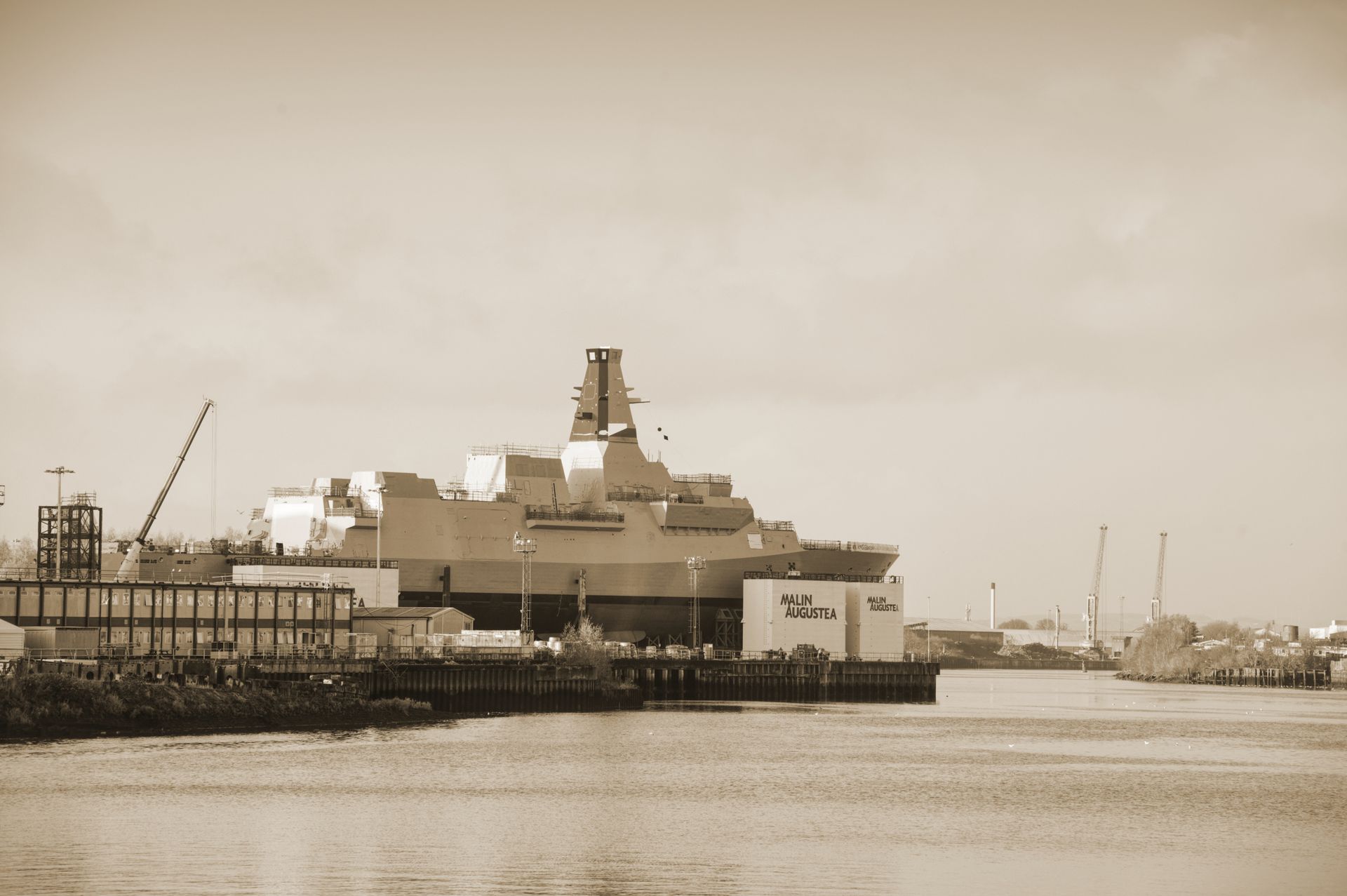
The strength of public feeling around Gaza is real and should be respected. But it cannot substitute strategic judgment, particularly when today’s decisions on skills, R&D and industrial capacity will define Scotland’s long-term security, and the contribution it makes to European security. The recently announced Norwegian Government contract with Scottish shipyards is just one example of how important our domestic sector is to our fellow Europeans, but there are a great many more.
None of this represents a retreat from progressive values or political principles but is an attempt to put those values into practice in a modern setting. As American guarantees become increasingly conditional and unreliable, our own responsibility becomes unavoidable. For the SNP, defence must move from the margins of the party’s dialogue to the mainstream. No political party in Europe today can afford to stand still while the world shifts beneath its feet. The same goes for Scotland’s devolved ecosystem – parliament, government, civil service and agencies – which needs a new way of engaging these issues. Whitehall should use the opportunity to design a more sophisticated, modern and robust way of thinking about security and devolution.
The global shifts underway are structural, not cyclical, and they demand serious adaptation rather than rhetorical reassurance inspired by old ways of thinking. Security is the foundation on which credible policy – economic, social or constitutional – must now rest.
Stewart McDonald is the Founding Director of Regent Park Strategies. He served as the SNP MP for Glasgow South from 2015 – 2024, during which time he was the party’s Defence spokesman and member of the House of Commons Foreign Affairs Committee. In 2019 he was awarded the Ukrainian Order of Merit by President Zelenksy for his longstanding support for Ukraine.
1 comment
Gordon W Brown
Well said and about time, but will the Snp listen. We are in a time of crisis and it is going to get worse.The british government is not much better, the combined armed forces of these isles are in a dreadfull state. Idiot decisions on deployments are made on a regular basis, Waisting limited resources as we speak.