


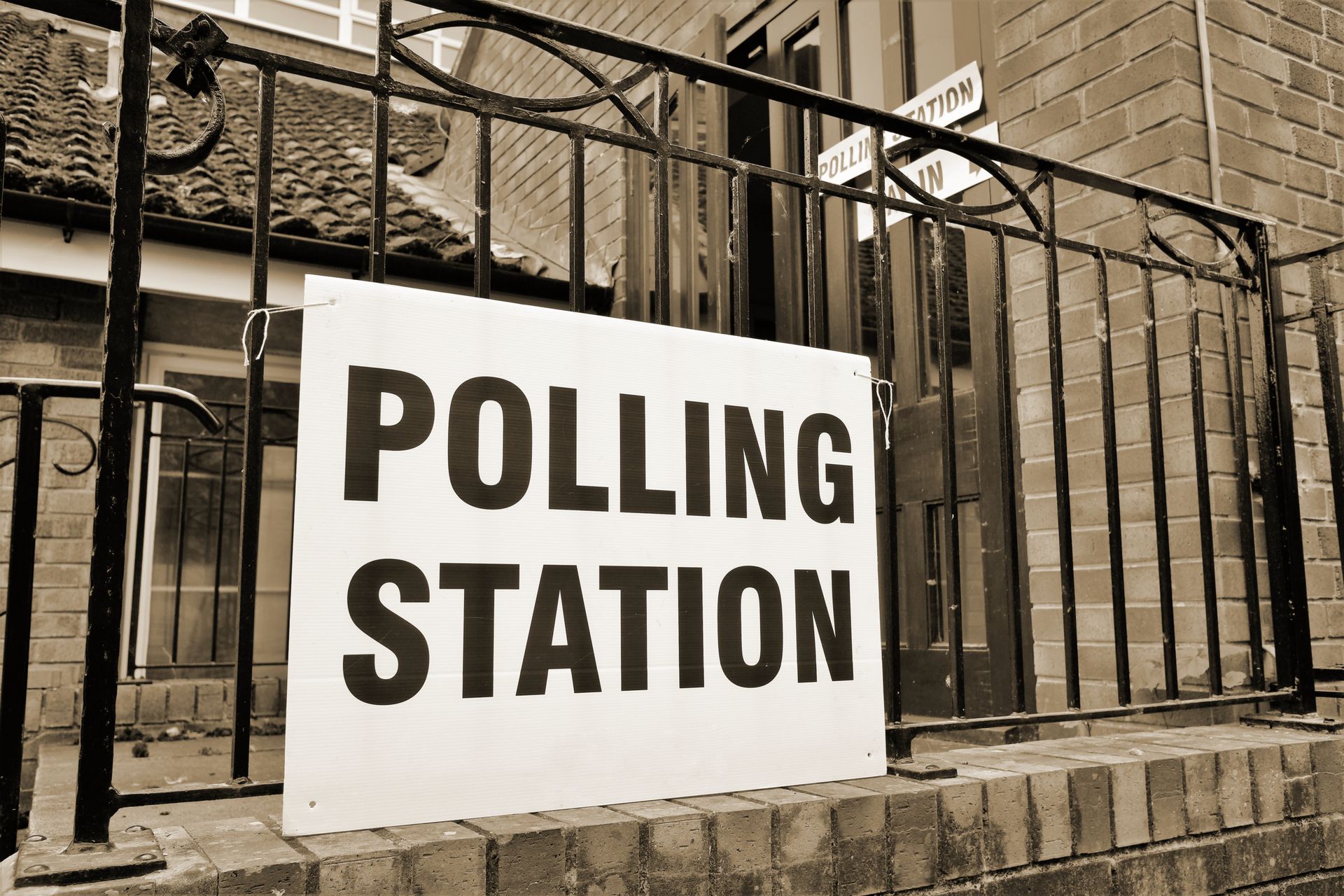
On recent evidence, only slightly over half of the voters will participate in the seventh election of the Scottish Parliament on 7 May. The others will stay at home, be away from home, have moved address or be missing from the electoral register. Many of those who do vote will have used a postal vote, which is also available to those who don’t. There is an apathy towards voting, as well as an exclusion or incorrect registration of the young and socially disadvantaged groups. Democracy is the loser.
The vaulting ambition of Scotland nurtured by the devolution settlement of 1999 is less evident as this election approaches. The electorate has grown weary, the Parliament that emerged from a period of intense civic participation and goodwill has lost its mojo.
Even in the halcyon early days, more people abstained in Scottish Parliament elections than the party winning the largest number of constituency votes, and this has continued. There has also been a significant decline in the electorate’s trust in the Scottish Parliament, from 81% in 1999 to 47% in the most recent Social Attitudes Survey in 2023. These measures suggest that our system of representative democracy requires some diagnosis and surgery. The locus of democracy in Scotland had switched to the Scottish Parliament after 1999 when much of the fourth estate also decamped to Edinburgh. It has meant far less scrutiny of the damage done to local democracy with the focus on the workings and tribulations of the Parliament.
If not voting offers a proxy for the scale of apathy, the table below illustrates the scale of the democratic deficit. And apathy creates a vacuum in any democracy and triggers mistrust in the institutions and their elected representatives.
| Year | Total Registered Voters | Constituency Votes Cast | Did Not Vote | Constituency Votes for Largest Party |
| 1999 | 4,027,433 | 2,350,327(58.4%) | 1,677,106 | 908,346 |
| 2003 | 3,877,460 | 1,928,877 (49.7%) | 1,948,583 | 663,585 |
| 2007 | 3,899,472 | 2,102,609 (53.9%) | 1,796,851 | 664,227 |
| 2011 | 3,950,626 | 1,995,639 (50.5%) | 1,954,987 | 902,915 |
| 2016 | 4,099,907 | 2,288,369 (55.8%) | 1,811,583 | 1,059,898 |
| 2021 | 4,277,996 | 2,716,785 (63.5%) | 1,564,000 | 1,291,204 |
Source: House of Commons Library, Election Reports
Many reasons are given for the voters’ apathy: Austerity, Brexit, Covid, cost overruns on capital projects and Westminster. During its 26 years, the Scottish Parliament has also accumulated powers and functions rather than devolving them to local democracy as promised in the heady days of its formation. Planet Holyrood now has in its orbit 133 quangos, that’s 4 times as many moons as there are councils in Scotland. This has shifted accountability away from local democracy to the Scottish Government and non-democratic bodies. It has made collaboration on placemaking more difficult. Councils have been stripped of functions, council tax has been frozen, and other funding has been ring-fenced. This has had a domino effect on communities and voluntary bodies, who have lost grants from councils and become dependent on bidding for Scottish Government funds that are too focused on Scottish-wide priorities and often take forever to get responses. “All politics is local” is not just a soundbite; it has a rectitude that should concern the Scottish Government.
The electorate is not glaekit; evidence suggests that they have lost faith in political parties. They are perceived by many as self-serving and out of touch with the issues, commonly local, that most concern them. In the eyes and the ears of the public, the way that the Scottish Parliament works is seen as too tribal both within and between parties. The paradox of fair is foul and foul is fair has been resurrected. More collaboration and respect between parties and a little localism would not go amiss as Scotland becomes increasingly Edi-centric.
Successive Scottish Governments have introduced a blitz of policies, many of which wither on the website. Others have been widely welcomed, but there has been a lack of pace or resolve in their delivery. Democracy is losing its religion and failing to mobilise its greatest asset: its people, communities and businesses. They have little sense of ownership and feel disconnected as power has gravitated to Holyrood. The media, lobbyists and consultancies have migrated to Edinburgh and doubled down on the toil and trouble that the Scottish Parliament provides. This feeds the apathy that disrupts Scotland’s democratic institutions at both the national and local levels.
Scotland is not alone in losing its democracy. It is losing traction worldwide with the rise of populism and the influence of social media. Elsewhere, it has opened the opportunity for oligarchs and more extreme parties to gain influence and power. They are often supported by global techno giants who are seeking to reduce taxes and regulations and who have a sociopath’s antipathy to many public services. Scotland has remained largely aloof from these trends, but a weakened democracy, monopolised by Holyrood, makes it more susceptible to future shocks.
Not voting as a proxy for apathy is a known unknown. There have been persistent low turnouts with more than 1.5 million voters not voting at every Scottish Parliament election. According to the Electoral Commission there could be up to a million people who are either not on the electoral register or incorrectly registered. Those incorrectly registered will form part of the non-voters. This results in democratic participation and engagement being far from inclusive. Vox pop interviews, social media posts and opinion polls all chronicle the estrangement between voters and their representatives. This, in turn, brings a disconnect with our various democratic bodies. It is not helped by a commonly held belief, nurtured by politicians and the media, that MSPs ‘run’ most public services. Ministers do not run services, although they have accumulated a large portfolio of public services that they control through appointed bodies. These non-democratic bodies, including Health Boards, are accountable for operational matters. The remaining public services are managed by councils. This increasingly complex mesh of public service accountability is as confusing to the voters as it is frustrating to the managers within both the democratic and non-democratic organisations.
We have argued in earlier papers that it is time to sort out Scotland’s crowded public sector landscape. This farrago of public sector bodies allows the Scottish Government to delegate the blame for failing services to either non-democratic bodies or councils, whose budgets they largely control. Westminster is also castigated for many of the problems, even though the majority of public services have been devolved to the Scottish Parliament. In short, the Scottish Government is jousting with Westminster and Councils to take the kudos for success and delegate the opprobrium of failure. It is no way to run a country.
In a recent paper published by Enlighten, Revitalising Local Democracy in Scotland/ we set out some of the issues that the next Scottish Parliament might address to improve the effectiveness of democracy at the local and national level. In this paper, we suggest ways to tackle apathy to achieve a more participative and valued democracy. This requires looking at how we improve both representative and participative democracy, how effective are our voting systems and rebalancing the accountability of our public services.
Improving Representative and Participative Democracy
Having more abstentions than voters for the party forming a government is not a good look for a well-functioning democracy. Whilst postal voting has grown significantly in the life of the Parliament and helped turn out rates, there are far too many eligible voters, especially the young, who are not on the electoral register. In 2023, the Electoral Commission called for the Scottish and UK governments to clear legal gateways for government departments and public bodies to share data on potential eligible voters. Progress has been slow. Meanwhile, increasing numbers of people are familiar and keen to use online voting for a variety of customer services and competitions. It is easier and far quicker than voting at polling stations or by post.
The adoption of a national digital identity scheme could ensure everyone is on the register in their appropriate electoral ward or constituency. (A Digital ID would incorporate a person’s current address) It would also make it easier to introduce compulsory voting, which is already adopted in 22 countries, and should be considered as an option. According to Ipsos estimates from the 2024 general election, the UK has a hugely unrepresentative voting electorate. Those who vote are older, richer, whiter and less likely to be home owners. Compulsory voting could significantly increase the social inclusion of those least likely to vote. 18-24-year-olds are 34 points less likely to vote than those aged 65+, those renting are 36 points less likely than home owners and ethnic minorities 13 points less than white people. Bringing these groups to the vote would encourage their participation in the democratic process and prompt governments and councils to prioritise their needs. However, it must be coupled with initiatives to improve civic education, not only in schools, but across communities.
There is already a burgeoning engagement in place-making in many localities. There have also been local examples of people’s panels or citizens’ juries to consider burning issues that Parliament or Councils are reluctant to tackle in the face of potential public hostility. In the age of social media and online engagement in many activities, it is time to revisit direct engagement of citizens, wherein lies the origin of democracy
Streamlining our diverse and confusing voting systems
Westminster’s MPs are elected by a first-past-the-post system with 650 constituencies. It is simple and easy to understand, but results in an over-dominant presence of the largest parties and under-representing smaller parties or independent candidates. The pressure to move towards a more proportional system is gathering momentum as the two-party duopoly cracks under the combined pressure of apathy, and the emergence of more extreme parties buoyed by social media. This coincides with a diminishing trust in established parties, which are blamed for declining public services, poor economic growth and a stream of corruption allegations. As the probability of majority governments diminishes, a voting system that moderates and encourages collaboration would be judicious.
The Scottish Parliament was established through a mixed-member proportional representation system. This elects 73 MSPs by the first past the post method and 56 MSPs through 8 regional lists, with 7 MSPs elected for each region according to the proportion of votes cast for each party, taking account of the constituency MSP elected. The modernised d’Hondt methodology ensures a fairer distribution of seats between parties, but the system is still widely misunderstood, with most voters thinking all elections are based on first-past-the-post voting.
It also creates two tiers of MSPs, with the constituency MSPs having the greater share of constituent enquiries and the list MSPs often competing to deal with issues. There is a greater tendency for voters to seek advice or attend surgeries from the MSPs from the party they support. The relationship between an elected representative and all of his/her electorate has been eroded and in turn has tended to reinforce party tribalism. Arguably, the ambition for a consensual Scottish Parliament through proportional representation has created a more oppositional forum.
Council elections are decided by another system of proportional representation, which was introduced in 2007 to replace a first-past-the-post system. The d’Hondt system was perceived as too arcane. So, a single transferable vote was used in the vast majority of councils for the election of 3 or 4 councillors to represent multi-member wards 3 or 4 times larger than previous wards. Again, this created tension between councillors and diluted the closer links between a councillor and all of his/her voters, irrespective of a voter’s political leanings.
Scotland has three different systems of voting, all with different objectives. First-past-the post results in the most popular party candidates being elected to serve for a specific locality (ward, constituency). The multi-member ward system tries to achieve a balance of members, more akin to the share of votes for different political parties. In doing so, it spreads the responsibilities for place and puts stronger emphasis on political allegiance. Whilst there is much anecdotal evidence of how this is working, or not working, it has never been evaluated for its effectiveness or otherwise. The modernised d’Hondt system for the Scottish Parliament is the purest form of proportional representation. However, it begs the question of whether voting for political parties, which are themselves increasingly diverse in their beliefs, should be the sole determinant of a voting system. Traditional political parties have lost esteem, and new groupings are gathering support. There is a danger that this may exacerbate the conflict between parties rather than facilitating the constructive dialogue, collaboration and a focus on realistic democratic outcomes that the electorate desire.
Rebalancing public service lines of accountability
A Parliament in Scotland with powers to make laws over almost all elements of the public realm and allocating almost £69.98 billion in 2026/27 provides an enormous opportunity to be canny and swift in dealing with issues, problems and opportunities. But, the scope for creating these outcomes is rendered impossible in a complicated operational landscape of 133 quangos and 32 councils. Accountability and budget responsibility must be allocated to the most appropriate body to facilitate effective placemaking and reduce confusion. Scotland must also invest trust in its communities, which are often best placed to diagnose issues and propose effective and economical solutions.
Surely after 27 years, when the enthusiasm for the Scottish Parliament and other democratic bodies is on the wane, it is time to unclutter the operational landscape and mobilise the prodigious skills and abilities of Scotland’s people, communities and businesses. Releasing their inventiveness, passion and pride would make democracy more participative, inclusive and local. With a large number of current MSPs retiring, there will be a refreshed intake of MSPs after the May election. They will have the opportunity to be less partisan and more focused on collaboration and delivery. A wise democracy should be unlocking the tools of conviviality.
Sir George Reid, the former Presiding Officer of the Scottish Parliament, gave some sage advice “Do things with the people of Scotland, not to the people.”
The Mercat Group is an informal network of former chief executives of Scottish local authorities with over 220 years of public service between them, including 70 years as chief executives.