

Andy Burnham’s vision for devolution is based on his experience as Mayor of Greater Manchester, but it provides a blueprint for empowering all local places and communities, making a compelling case for Scotland to overhaul its highly centralised governance model. The First Minister’s Programme for Government now recognises the need for a debate about regional governance in Scotland but will it go fast enough and far enough to catch up with England?
English City Region Devolution
Andy Burnham, as the Mayor of Greater Manchester (in common with other English city regions but GM was the first) has pioneered a model of “place-based” governance that shifts power away from national government to regional leaders. This devolution agenda for England and Wales – supported by the recent Devolution and Community Empowerment Act – operates on the principle that visible local leaders and mayors understand their communities better than Whitehall or Holyrood do.
Burnham’s strategy has focused on several core pillars:
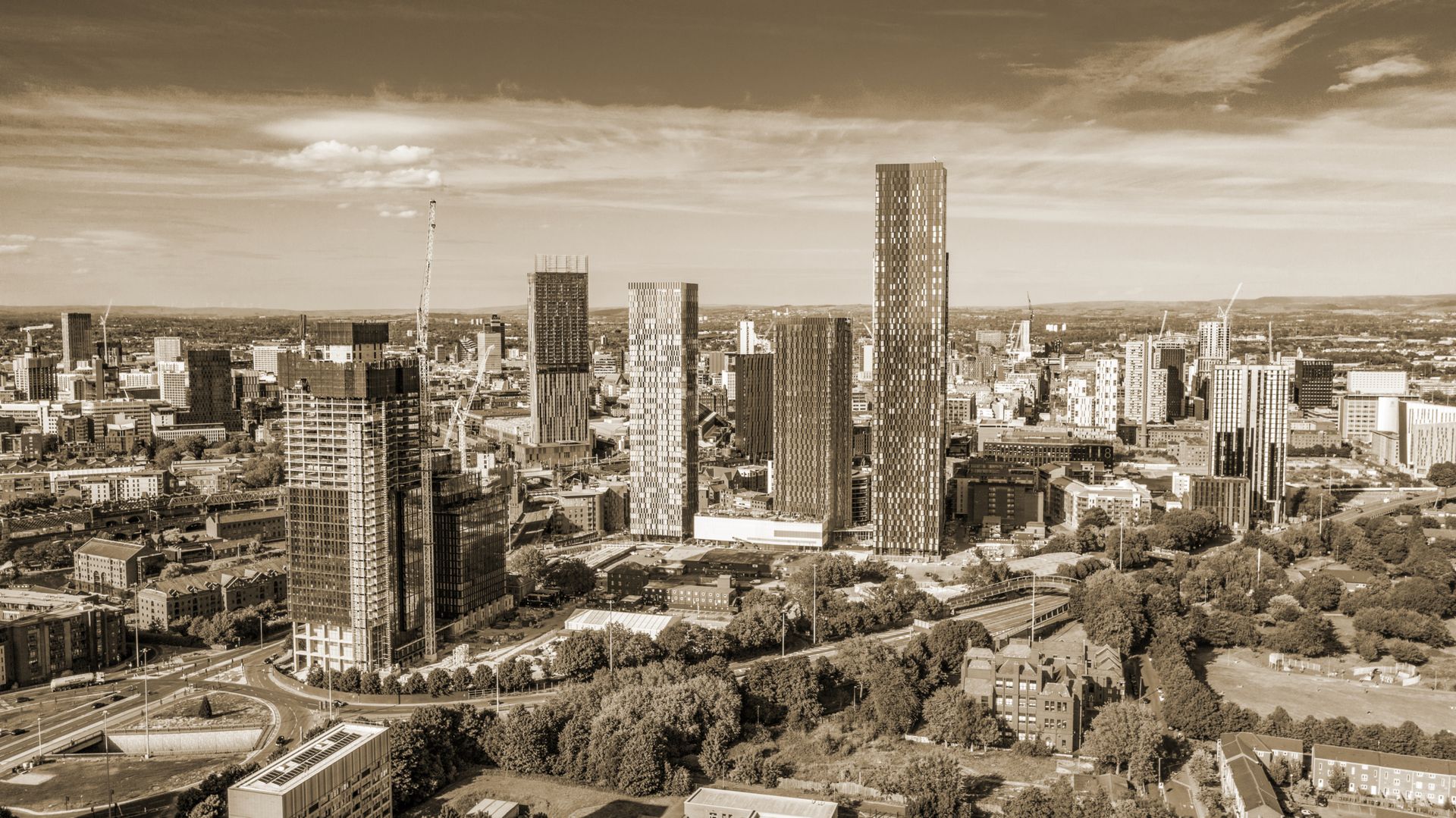
Vision and Strategy: Since the formation of the Greater Manchester Combined Authority in 2011 and Burnham’s election as Mayor in 2017, the Manchester City Region has always had a clear focus on the key drivers for economic growth. Building on the leadership that regenerated Manchester city centre under then leader Sir Richard Leese and CEO Sir Howard Bernstein at Manchester City Council from the time of the IRA bomb in 1996, Burnham has continued to combine public and private sector funding to regenerate the retail, commercial office, housing and cultural offer of GM and has added a focus also on transport and skills.
As PM Burnham has promised a 10-year plan for the UK before the end of the year, echoing the ten-year GM Strategy first published in 2022. The Devolution and Community Empowerment Act also calls for all Mayoral Strategic Authorities to produce 10-year Local Growth Plans.
Integrated Public Transport: The creation of the `Bee Network’ brought Manchester’s buses back under public control. This ended decades of deregulation, lowered fares, and helped synchronize schedules with the Manchester Metrolink tram system. The strategy was to enable easy access for all residents across Greater Manchester to access work, education, training and leisure opportunities. An early pledge to cap bus fares at £2 from January 2027 to be rolled out in England now replicates what was already in force in Greater Manchester.
Lothian buses, which arguably led the way on public ownership, is unique in Scotland and the only success that Scottish Government has to demonstrate public control of buses helps in shifting people out of their cars. But it hasn’t been replicated anywhere else in Scotland. Glasgow has stated it will move towards a proposed local franchising system under Strathclyde Partnership for Transport (SPT) in due course. Meanwhile the £2 cap begun this week in Glasgow, Renfrewshire, Ayrshire, Dunbartonshire, Lanarkshire and Inverclyde with a promise to cap fares across the whole of Scotland by the end of the parliamentary term.
The Trailblazer Devolution Deal: Building on the pioneering City Deal for Manchester in 2012, which included the ‘Earnback Model’ whereby GM would retain additional tax revenues to create a revolving £2.5 billion investment fund (rather than offering tax rebates for businesses), numerous versions of City and Devolution deals followed, delivering further powers and funding for skills, health and social care, business support and also a low carbon hub. This led to the Trailblazer Devolution deal agreement which granted Greater Manchester single-pot funding settlements. This allowed the region to manage its budget flexibly across housing, skills, training, and regeneration. The long term goal for GM is fiscal independence starting with 100% retention of business rates, but also some retention of income tax first mooted in the ‘Earnback Model’ (though strongly resisted at that time by the UK Treasury).
Skills and training: The skills devolution in Manchester is a significant initiative aimed at enhancing the city’s workforce and economic growth. As Mayor, Andy Burnham outlined ambitious proposals to control skills provision and work with employers to build a skilled workforce. The devolution included further control over the post-19 skills system and a stronger role in technical and professional education for 16–19-year-olds. This initiative was part of a broader strategy to create a skilled local workforce and to ensure that residents had a clear line of sight to good jobs at every age, with support to find, stay and progress in work. This included locally funded skills training and high-quality apprenticeship programs. The Learning, Training, Employment group (LTE Group) a key player in this initiative, is working to gain greater control over post-16 technical education, enabling Manchester to become the UK’s first technical education city region. This move is seen as a crucial step in delivering high-quality skills provision and addressing the skills gaps identified by employers. Critical to this is the Manchester Baccalaureate (MBacc) which helps schools direct pupils towards vocational as well as academic qualifications linked to growth sectors in the Manchester economy.
Housing: Mayors in England will be equipped to support the building of council homes, including through greater devolution of the Social and Affordable Homes Programme and investment to upgrade to warmer homes, and government will strengthen the framework for public development corporations to drive local housing and infrastructure.
Accountable Leadership: A directly elected mayor serves as a single, visible point of accountability. This high profile helps drive investment, negotiation with the central government, and championing of local identity. All city regions which are mayoral authorities or regional/metro mayors (14 now in England) lead combined authorities of combined county authorities that span multiple councils and manage regional issues such as transport and housing. Whilst the mayoral model has not been adopted anywhere in Scotland, the evidence from England is that mayors give profile and accountability to their areas backed by strong governance and resources.
Why Scotland’s Cities and Regions Need Devolution
The economic risk facing Scotland is not through a failure of national devolution, but a failure of local devolution beyond Holyrood. While the Scottish Government has historically prioritised national economic policy at Holyrood, it has centralized power in Edinburgh and set up a plethora of national agencies that lack the local focus that could drive greater growth. This lack of municipal empowerment leaves Scottish city-regions at a competitive economic disadvantage compared to England’s mayoral and combined authorities. Scottish city-regions have far less local control than their English counterparts. Most city regions in Scotland operate as Joint Committees rather than the stronger Combined Authorities or Mayoral Combined Authorities in England. Bringing Burnham’s style of devolution to Scotland is essential for several reasons:
1. City Regions Require Local Autonomy
Scotland’s economic drivers—such as the city-regions of Glasgow City Region, Edinburgh and SE Scotland, Aberdeen and Aberdeenshire as well as those for Tay Cities Region, Stirling and Clackmannanshire, and Inverness & Highlands, face vastly different challenges. Glasgow requires heavy investment in urban regeneration and connectivity. Aberdeen needs to continue to navigate a just transition away from North Sea oil and gas (despite expectations of further licenses for extraction being granted); Inverness needs better digital connectivity, housing and tourism infrastructure. A uniform policy directed by the Scottish Government cannot effectively manage these distinct economic realities nor those of the other areas of Scotland.
In the Programme for Government the First Minister announced that he would ‘engage in an intensive dialogue over the next three months with partners in local government and others to reach a clear shared direction about the future of local governance in Scotland.
.2. Fixing Unintegrated Transport Systems
Unlike Manchester’s integrated Bee Network, Scotland’s regional transport remains fragmented. For instance SPT lacks the robust regulatory powers and funding that Burnham used to overhaul Manchester’s network. Giving Scottish regions the power to franchise bus routes and integrate ticketing across rail, subway, and bus lines would vastly improve public services. Only Edinburgh’s Lothian Buses (owned by four councils but with Edinburgh having the majority stake) comes anywhere near what an integrated transport system needs to look like across a city.
3. ‘Single-Pot’ Financial Deals
Currently, Scottish local authorities rely heavily on ring-fenced funding from Holyrood. This restriction stops councils from spending money where it is most needed. Adopting a ‘trailblazer’ devolution deal model in Scotland would grant city-regions powers and grants for integrated transport (including the rail services), housing and regeneration (GM controls a £300m housing fund aimed at delivering 15,000 new homes), skills and employment support to enable GM to tackle economic inactivity allowing them to design long-term solutions to local issues.
4. Enhancing Democratic Accountability
A single, directly elected metro mayor creates a powerful voice for a city region. In Scotland, local council leaders (even those who Chair Joint Committees of city regions) are often invisible to the general public and tied by loyalty to their own councils rather than taking a strategic view. Elected mayors for areas like Greater Glasgow or Edinburgh and SE Scotland would give these regions the political leverage to attract international investment and argue for more devolution from central government.
Conclusion
Devolution should not stop at Holyrood. By centralizing power in Edinburgh, the Scottish Government risks stifling the growth of its most vital assets – the Scottish city regions. Adapting Andy Burnham’s English devolution agenda for Scotland could strengthen local economies, fix broken transport networks, build houses and return genuine decision-making power to the people.
It’s clear from the Programme for Government that ‘The Government believes there is a need for regional local government, alongside community empowerment, and will engage with partners to find common ground’. This implies national agencies such as the three economic development agencies for Scotland, Skills Development Scotland and other quangos will also be engaged.
In on-going conversations between our First Minister and the new PM, these issues are bound to be raised. If there is to be ‘good growth in every postcode across the UK’ as the PM has pledged, then Scotland’s centralised model can’t be ignored. Calls from the FM for a further referendum for Scottish independence have been rebuffed in favour of deepening local devolution across the UK and practical measures on the cost of living and energy bills. For the sake of the UK economy the whole of the UK needs to be performing.
There has to be some devolution to the six city regions across Scotland and the six Growth Deals that cover the rest of Scotland if Scotland’s economy is going to remain competitive with the further empowered and confident city regions of England.
Graham Pinfield worked as Principal Economic Policy Officer in City Policy in Manchester City Council from 2009 – 2013 and then for Glasgow and Perth and Kinross Councils until July 2026.