


Efficiency is probably the most overused word in health policy.
Every funding settlement assumes it. Every budget promises it. Every programme of NHS reform relies on it. Yet productivity in NHS Scotland remains stubbornly difficult to improve – and even harder for patients to perceive. The problem may not be a lack of will, but rather a lack of clarity about what efficiency in healthcare actually means and where it is realistically found.
Healthcare is not a factory. Outputs are complex, variable, and increasingly long-term. A patient with multiple chronic conditions cannot be processed like a standardised product. At the same time, the NHS cannot escape economic reality. Demand is increasing faster than funding, partly due to Scotland’s rapidly ageing population, and clinical expectations rightly increase over time. In this environment, maintaining current service levels already requires productivity growth.
The paradox is this: national policy treats efficiency as a centrally driven target, while operational efficiency is usually local, pathway-specific and clinically led. When productivity becomes an abstract percentage attached to a budget, it risks becoming detached from how care is actually delivered.
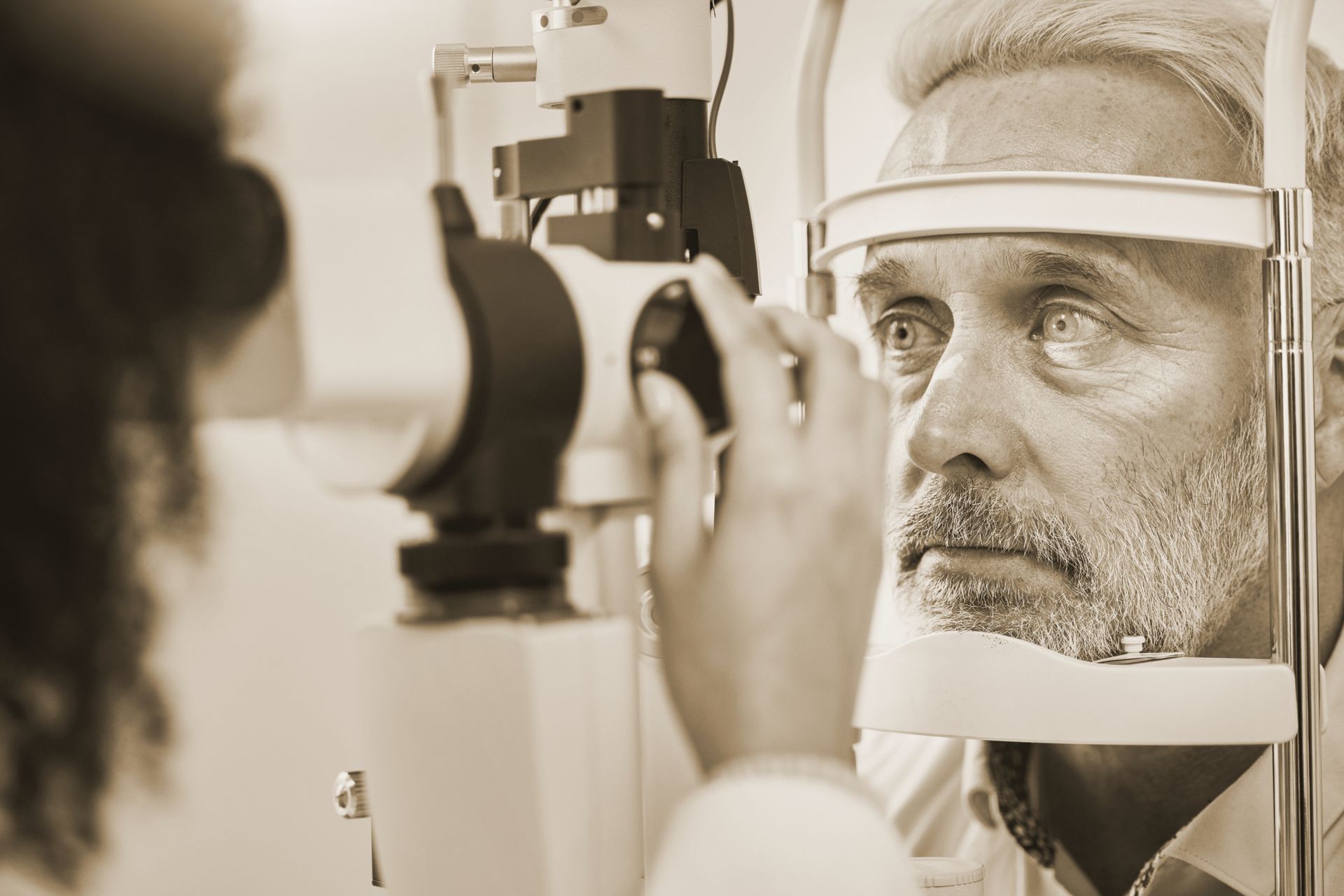
In ophthalmology, as in many specialities, inefficiency oftens presents not as dramatic waste, but as friction in the system which patients perceive only too well. Whether this be delayed follow-up appointments, bottlenecks in diagnostics or patients lost between primary and secondary care, they have the same effect as rusted gears grating against one another.
Take glaucoma care. The greatest threat to sight after delayed diagnosis is missed follow-up. Yet across the country, there has historically been no consistent mandate to measure follow-up delays. Where data is incomplete, accountability is blurred. When accountability is blurred, inefficiency persists. This is not about individual performance – it is about system design.
Perhaps unsurprisingly, where innovation is encouraged, meaningful productivity gains can be found. Ones that go hand in hand with treating patients faster and delivering better health outcomes.
Scotland’s experience establishing National Treatment Centres offers a useful example of what design-led efficiency looks like in practice. Established by the Scottish Government to increase elective capacity and reduce waiting times, these centres focus on high-volume, planned procedures delivered in streamlined environments. By separating elective care from unscheduled pressures, standardising pathways and concentrating specialist teams, they demonstrate that productivity gains are most durable when they are embedded in service design rather than imposed as percentage savings.
Since our inception in 2007, Newmedica has been working to apply this same logic to ophthalmology services, partnering with the NHS to meet growing patient need with the number of cases of chronic eye conditions, such as glaucoma, forecast to increase in the coming years as the population ages.
To meet this demand, Newmedica delivers end-to-end pathways, or a partial element working with a hospital, for a range of ophthalmology services including glaucoma, Age Related macular Degeneration (AMD), oculo-plastics and cataracts. By optimising clinic workflows, harnessing the latest diagnostic and surgical technology, and focusing teams on highly specialised pathways, we can treat more patients safely and effectively each day. This doesn’t just mean higher throughput – it also means patients spend less time waiting for appointments, diagnosis or treatment, which is crucial as demand for eye care rises.
When clinicians are empowered to redesign care pathways, streamline processes and adopt evidence-based efficiencies, more patients can be treated without compromising quality.
There are roughly 26,000 patients waiting for ophthalmology treatment in Scotland. As the Scottish Government grapples with severe funding constraints, surely, we must consider how care can actually be delivered most efficiently and how existing system capacity can be used to bring down waiting lists.
The NHS has always operated as a mixed economy, commissioning services from NHS trusts, social enterprises, and independent providers – all delivering free at the point of care treatment. We all appreciate the convenience of popping into our local pharmacist or optician to access the care we need at the most convenient time and location. Using all the available capacity is not about ideology – it is about practicality. It is about ensuring that every part of the system is empowered to deliver its potential, reducing bottlenecks and making full use of available expertise, while remaining free at the point of use.
Ultimately, efficiency cannot be an accounting exercise. For patients, it means not waiting months for follow-ups. Not having appointments cancelled at short notice. Receiving care closer to home.
When follow-up delays lead to avoidable sight loss, the cost is not only clinical – it is social, emotional and economic. Preventing that outcome is both compassionate and efficient.
If NHS reform is to succeed, efficiency must be reframed. It is not about extracting more activity from overstretched teams. It is about designing pathways that prevent friction, clarifying accountability and enabling practitioners to innovate and encouraging the reinvestment of profits back into the services and training of the future generation of clinicians.
Efficiency is not delivered by proclamation. It is delivered by design.
Nigel Kirkpatrick is Newmedica’s Medical Director