


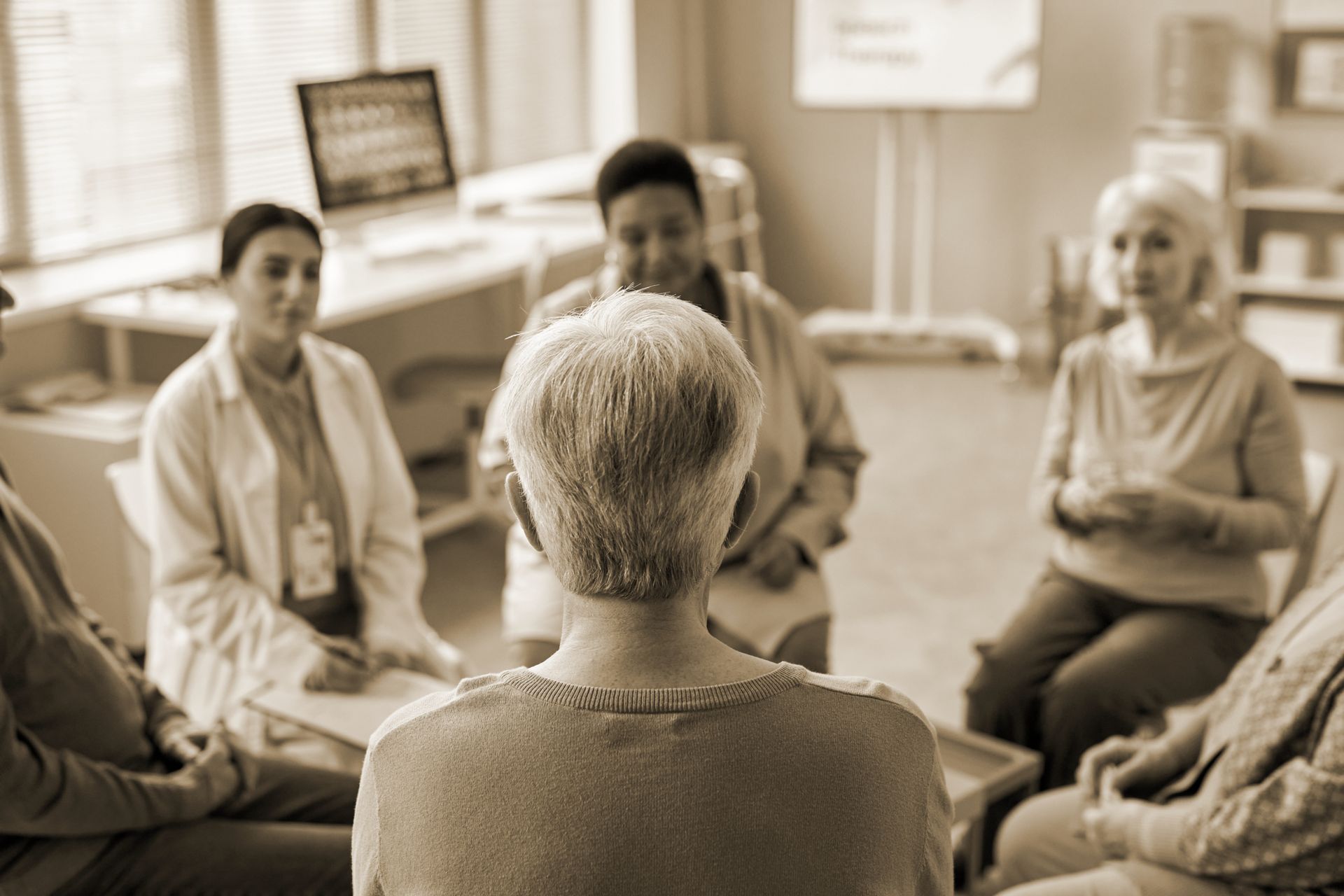
This blog notes that patient participation in NHS decision-making is more developed in England than in Scotland. It argues that enhanced arrangements in Scotland would help to (a) ensure that services meet patients’ needs and circumstances, (b) promote public understanding of the NHS’s challenges, and (c) enable public goodwill towards the NHS to find expression through co-operation and help wherever possible.
Patient participation groups
Since 2015 GP practices in England have been contractually obliged to set up patient participation groups. These are volunteer-led groups of patients and GP staff working together to improve local services, advising the practice on the patient perspective. Statutory guidance defines their purposes as being to offer practical support, improve communication between the practice and patients, and act as a critical friend to the practice. They meet, say, 4 times a year either in person or virtually.
In Scotland there is no contractual or statutory requirement for GP practices to set up patient participation groups, although around 100 out of the 900 or so GP practices in Scotland have done so – presumably because they see these groups as useful. Although the Scottish Health Council has drawn up a start up guide for PPGs, there is no obligation in Scotland for practices to follow this guidance.
Some examples of contributions made by patient partnership groups:
• newsletters explaining changes in personnel and practice processes, and the challenges currently faced by the practice
• providing patient feedback on the processes operated by the practice and on any changes proposed from time to time
• holding public events on measures to prevent ill-health
• commenting on the waiting and other areas of the practice – seating, information available and decoration
• engaging local schoolchildren
• fundraising for items of additional equipment
The Patients Association
The Patients Association was founded in England in 1963 in the wake of the thalidomide scandal. It has been a registered charity (with the English Charity Commission) since 1978. The association is funded by individual and corporate donations and does not receive any core funding from central
government or the NHS. it aims to provide a collective voice for patients, operating through “patient engagement, policy influence, national campaigns, project work and consultancy”. It defines its role as “championing the patient voice”.
The Patients Association’s current activities include providing a helpline for patients seeking to navigate the structures of the NHS, conducting campaigns which, for example, led to the NHS Constitution and the Patients Charter in England and Wales, providing advice for Patient Participation Groups and producing reports on, for example, patient experience of diagnostics. Following the 2026 Kings Speech, the Patients Association issued a press statement welcoming (in principle) the proposal from the English Department of Health for a Single Patient Record and making both positive and negative comments on other proposals. More recently the Association has given evidence to the Commons Committee scrutinising the current (English) Health Bill.
Although it regards itself as a UK charity, and its membership and helpline is open to Scottish patients, the Patients Association has no Scottish presence, does not have any interface with NHS Scotland and has no funding for work in Scotland.
Presenting the patient perspective in Scotland
The Scottish Charter on Patient Rights and Responsibilities (revised June 2022) states that patients
“…have a right to be involved meaningfully in designing, developing and delivering services in my area”
However, the arrangements to enable patients to exercise that “right” are limited. Scottish regional health boards do not have spaces for patient representatives. The non-executive directors on these boards are appointed for the skills and experiences they have acquired in their working lives rather than as patient representatives. The Integrated Joint Boards responsible for local health and social care do have “user representatives” – who have recently been given full Board voting membership – but they can only express views based on personal experience since there is no supporting patient network.
Together with COSLA the Scottish Government has issued guidance to Health Boards and Integrated Joint Boards on “community engagement” in the document titled “Planning with People” (updated 2024). This primarily deals with the consultation processes to be followed when changes are in
prospect rather than the ongoing involvement of patients in agenda-setting and decision-making. There is no mechanism for assessing the extent to which the guidance is followed. It should be noted that the emphasis is on “community engagement” and “listening” – seeking a public response to an NHS driven agenda – rather than patient choice and empowerment.
By comparison the equivalent English document “Working in Partnership with People and Communities” goes beyond consultation to emphasising that the needs and opinions of patients and communities should be “central to how we plan, deliver and improve services”. Other notable aspects of the English guidance include the following
• in England Integrated Joint Boards are subject to an annual assessment by NHS England which covers public involvement among other things – and a summary of the annual assessment is published
• interested members of the public can involve themselves in the Start with People network and also other networks focussing on primary care and health inequalities
• specific provision is made for children and young people to offer their views and experiences through a youth forum and the Children and Young People Transformation Programme Board
The NHS in Scotland does not offer nearly such an active approach to patient participation as in England. However it does make some provision for finding out the patient perspective on its services through surveys and the Scottish Health Council.
Despite its grand title the Scottish Health Council is in fact a sub-committee of Health Improvement Scotland, which is a special health board entirely funded by the Scottish Government. The Scottish Health Council does not perform the patient advocacy and championing role of the Patients Association in England and it does not issue press statements on aspects of the Scottish Government’s health policy from a patient perspective. But it does undertake a number of roles as regards patient involvement in the NHS in Scotland:
• it publicises the work of PPGs in Scotland, for example through videos on its website
• it issues guidance to health boards on the conduct of public consultations when changes in the local NHS are proposed
• it supports volunteering in the NHS
• in 2019 it published the recommendations of a Citizens Jury on shared decision making between the patient and medical staff about personal care • it has set up a Citizens Panel which reports twice a year, giving the views of a sample of people on their experience of health and social care.
The Citizens Panel
Since 2016 the Scottish Health Council has published 17 reports on the results of its Citizen Panel surveys, the last being on 10 June 2026. Although these surveys have a limited base – around 1,000 people across Scotland are sent questionnaires and around 600 respond – they are well designed and provide information about the patient perspective on a number of issues. Each survey covers different areas of activity.
For example, the 16th survey asked questions about knowledge of the Charter on Patients Rights and Responsibilities and the Duty of Candour which applies when something goes wrong with a patient’s care. The survey also asked some questions about access to the NHS, with the following results about the views and experiences of those surveyed.
• 56% agreed that they can access the care they need when required
• 61% agreed that over the last 12 months the care they received met their health care needs
• 43% agreed that there is a joined up approach to the care they received from the different health care staff
• 69% agreed that it is important for them to see the same health professional when they have an appointment.
These figures are worth noting and in some respects are concerning, but since they were not asked in previous surveys it is not possible to know whether the figures given are rising or falling.
Where appropriate, the reports on the results of Citizen Panel surveys include recommendations which are passed on to the Scottish Government. However, since neither the Scottish Government nor NHS Scotland publishes any response to the survey reports and recommendations, it is not possible to know whether they are actioned or simply added to the (extensive) collection of bureaucratic wallpaper.
Health and Care Experience Survey
In addition to the Citizens Panel surveys, the Scottish Government and Public Health Scotland (a special health board) have conducted a much larger survey every 2 years since 2009. The results of the latest such survey for 2025-26 (costing £615,000) were published on 26 May 2026.
On this occasion 491,243 survey packs were sent out and 94,026 members of the public (representing around 2% of the Scottish adult population) completed and returned the questionnaires included with the packs. In
addition to 13 questions about their personal circumstances and their caring responsibilities, they responded to 31 questions about their access to GP practices, the treatment and/or advice received, their use of out of hours services, and care and support in every day living . In each case they were asked both about the means by which they had sought help and their satisfaction with the response. The survey did not extend to secondary health care in hospitals or clinics.
The headline results of the 2025-26 survey were as follows;
• 71% of respondents rated their overall experience of GP practices as “good” or “excellent” – the figure for the 2019-20 survey was 79% and that for 2023-24 69%.
• 78% found it “easy” or “fairly easy” to contact their GP practice in the way that they wanted – the figure for the 2019-20 survey was 87% and that for 2023-24 76%
• 72% who had appointments had them face-to-face – the figure for 2019-20 was 79% and that for 2023-24 73%
• 72% of those who used out of hours services rated them as “good” or “excellent – the figure for 2019-20 was 79% and that for 2023-24 73%
The general picture therefore is that public satisfaction levels with GP services and out of hours services is rising, but has not recovered to the levels seen before the pandemic.
Once again, however, there is no way of knowing what input – still less the “meaningful” input promised in the Patients Charter – the survey has in terms of influencing and changing NHS decisions and actions. No action plan, or even informed commentary, is published by the Scottish Government or Public Health Scotland on the results of the survey. For example, the satisfaction figures are available at GP practice level and it is noticeable that while some practices achieve 90% satisfaction levels among their patients others achieve only half of that. What reassurance can patients in the practices with low satisfaction levels have that action is in hand – either at practice or Health Board level – to improve the service they are receiving?
Areas for improvement
In my view action is clearly needed to enable Scottish patients to exercise their “right to be involved meaningfully in designing, developing and delivering services in their area”, as the Scottish Charter of Patients Rights and Responsibilities puts it.
I suggest that patient involvement in NHS decision-making in Scotland might be usefully developed in the following ways:
1. It should be made a contractual obligation for Patient Participation Groups to be established in all GP practices in Scotland.
2. Either the Patients Association should be enabled to operate in Scotland as it does in England, or a similar independent body should be set up in Scotland to champion patient involvement and to present the patient perspective in public debate.
3. The Scottish Government or NHS Scotland should make a public response to the outcome of public surveys such as the Citizens Panel and the Health and Care Experience Survey setting out what action is being taken.
4. Regional Health Boards and Integrated Joint Boards should set up patient participation forums in their areas, and representatives of those forums should be appointed to the Boards to ensure that the patient perspective is presented in meetings and taken into account in decisions made.
David Belfall was a non-executive member of NHS Lothian Health Board for 5 years in the 2000s, and for 7 months between 2024 and 2025 a “user representative” on the Edinburgh Integrated Joint Board – though (as is the general case) one appointed by the IJB rather than by any panel of “users”. Many years ago he was the Group Head at the Scottish Office responsible for Health Policy and Public Health.
1 comment
Ro Pengelly
This article is very welcome, as NHS in Scotland is weak on its engagement with citizens so to hear (and learn from) lived experiences and public perspectives. NHS has a statutory duty for public engagement. Yet it seems to place reliance on Care Opinion for trends, which is unsound in not being representative (for example, by location; health condition; whether an unpaid carer or patient; or a bereaved partner/family member). And many within NHS seem to fail to distinguish between fantastic citizens who undertake activities, for example with patients or to guide visitors in hospitals, and those citizens who struggle to present lived experiences and public perspectives.