

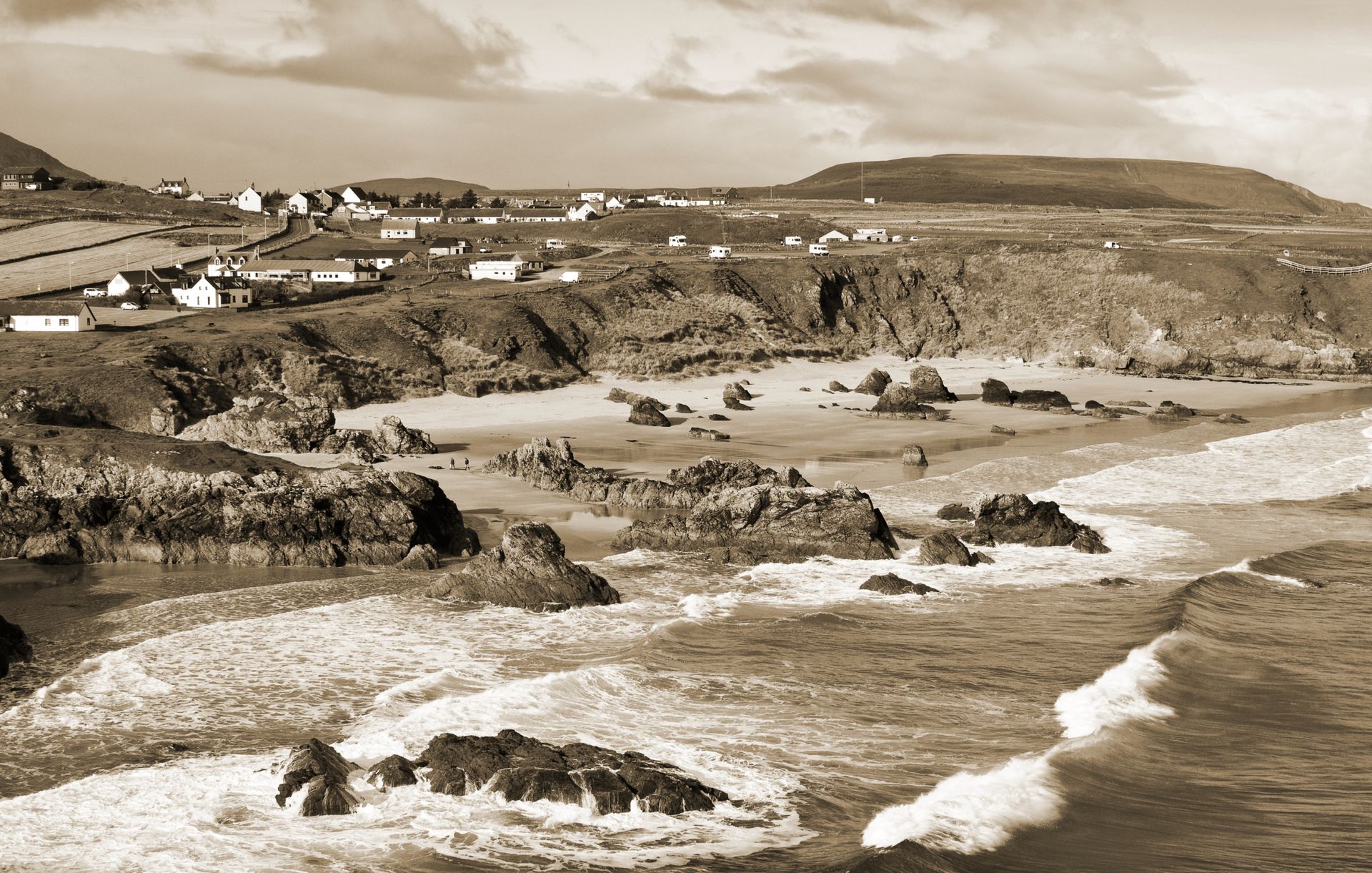
There’s something extraordinary about the far north coast of Sutherland. The landscape is wild and beautiful, and the people who live here carry a resilience shaped by remoteness, weather, and community spirit. Life is different here — not better or worse, simply different. You learn to adapt. You learn to rely on each other. You learn that the usual rules don’t always apply.
And yet, when it comes to remote health and social care, we’re still expected to fit into a model designed for towns and cities. A model that assumes proximity, availability, and infrastructure we simply don’t have. Why must remote communities be forced into urban systems that don’t work for them?
The same excuses, year after year
We hear the same explanations repeated across Scotland: budgets are stretched, the population is ageing, recruitment is difficult, services are under pressure. All true — but these reasons have become a blanket justification for a decade of service losses along our coast.
The real question is: what has been done to try to fix it?
Community organisations here have knocked on the door of the Health and Social Care Partnership many times. They’ve brought ideas, solutions, and practical proposals. What they’ve met instead is resistance — reasons why things can’t be done, never curiosity about what might be possible.
Meanwhile, Highland and national strategies talk endlessly about community development, local assets, and co‑production. Communities here have a simple response: stop writing about it and start doing it.
A social care desert
In June 2025, our community organised a public meeting. We invited senior leaders from NHS Highland and Highland Council, along with local politicians. We did this because we had reached breaking point.
Here’s the reality:
- Independent sector care‑at‑home contracts have gone unfilled for years.
- Social work is delivered from 60 miles away.
- Residents needing assessment have been described as “geographically challenged”.
- Our local care home closed three years ago.
- The NHS Highland care‑at‑home service was embargoed after a damning inspection report.
At that time, we had no functioning social care at all.
The perception problem
On paper, our area looks healthy: high life expectancy, low numbers of outstanding assessments. But these figures hide the truth.
People leave when their care needs increase because they believe it’s the only way to get support. Some call it a modern “Highland Clearance”. Others simply stop asking for help — they’ve learned that nothing will come of it. When you starve a community of care, people adapt by expecting less and coping with unmet needs.
The June 2025 meeting was meant to open the door to partnership working. But more than a year later, despite the embargo being lifted, almost nothing has changed.
Where resilience reaches its limit
Remote communities are strong, but even the strongest can struggle when facing end‑of‑life care. What’s happening now is heartbreaking.
A man forced to die far from home
A resident who lived within walking distance of the closed care home had to move 60 miles away to die. He lost the comfort of his community. His sister — who doesn’t drive — relied on others for a 120‑mile round trip to visit him. This was not a good death. It was not the supported end‑of‑life experience either of them wanted.
A couple left alone at the hardest moment
On the west coast, a couple tried desperately to manage end‑of‑life care at home. They had no family nearby, but they knew the community nurses were there for them. They thought real support would be available when they needed it. What they got was a 9.00am until 5.00pm service. Out‑of‑hours help was reduced to a phone number. They felt abandoned.
What could it have been like?
When the care home closed, we were promised its funding would stay in the community. With a new care home planned, those funds could already be transforming care:
- Extra out‑of‑hours nursing
- Redeployment of care‑home staff into 24‑hour community support
- A dedicated palliative care worker
- Coordinated community transport to support visits to those in out of area care
- Accommodation for relatives so no one dies without loved ones present
Add to this the independent sector care‑at‑home contract budget— unallocated for six years — and we could have built a community‑led care service by now. These funds belong to the community. They should be used for the care people need now.
The barrier no one wants to talk about
We need to talk about what people actually need — not about whether a service is “registered” or “statutory”. Across Sutherland, community organisations run care and support hubs that keep people independent and prevent crisis. They’ve done this for years, on static funding, and now many face financial collapse.
Despite three years of discussion, the Health and Social Care Partnership has found no sustainable solution. Third‑sector funding is “maxed out”, we’re told. Meanwhile, unused funds for statutory services sit untouched — inaccessible to the very organisations delivering the outcomes the strategies claim to prioritise.
It makes no sense. And it is costing people their independence, their wellbeing, and in some cases, their dignity.
A way forward — if we choose it
Highland’s plan is Community Led Support. I agree — it’s the only way forward. But it cannot happen while funding is locked away from communities and innovation.
The north coast of Sutherland has everything it needs to build a better system: spirit, skills, commitment, and community assets. What it lacks is belief that statutory bodies are willing to change. Confidence is at an all‑time low.
Real change requires bravery — the courage to act differently. So far, that bravery has not been shown by those with the power to open the door.
It’s time for action; to deliver true co production. With the ongoing North Coast (Sutherland) Health and Social Care Service Redesign, we have the mechanism to do this.
The Redesign needs a fresh start: capacity, structure, processes and commitment to achieve transformation.
- This must truly be community led
- We must identify all assets available to the community. No budget header barriers
- We can do more and better with what we have
- We need to identify the right people – those who can and will
- We need to quantify the real need through community voices
- We need to measure and test change
- We need to build on what we learn, embed what works, form sustainable new community service models
- And accept no excuses
Exemplary health and social care provision is possible in remote communities when it is owned by the people.
Andrea Madden is Chair of Hubs United Group