


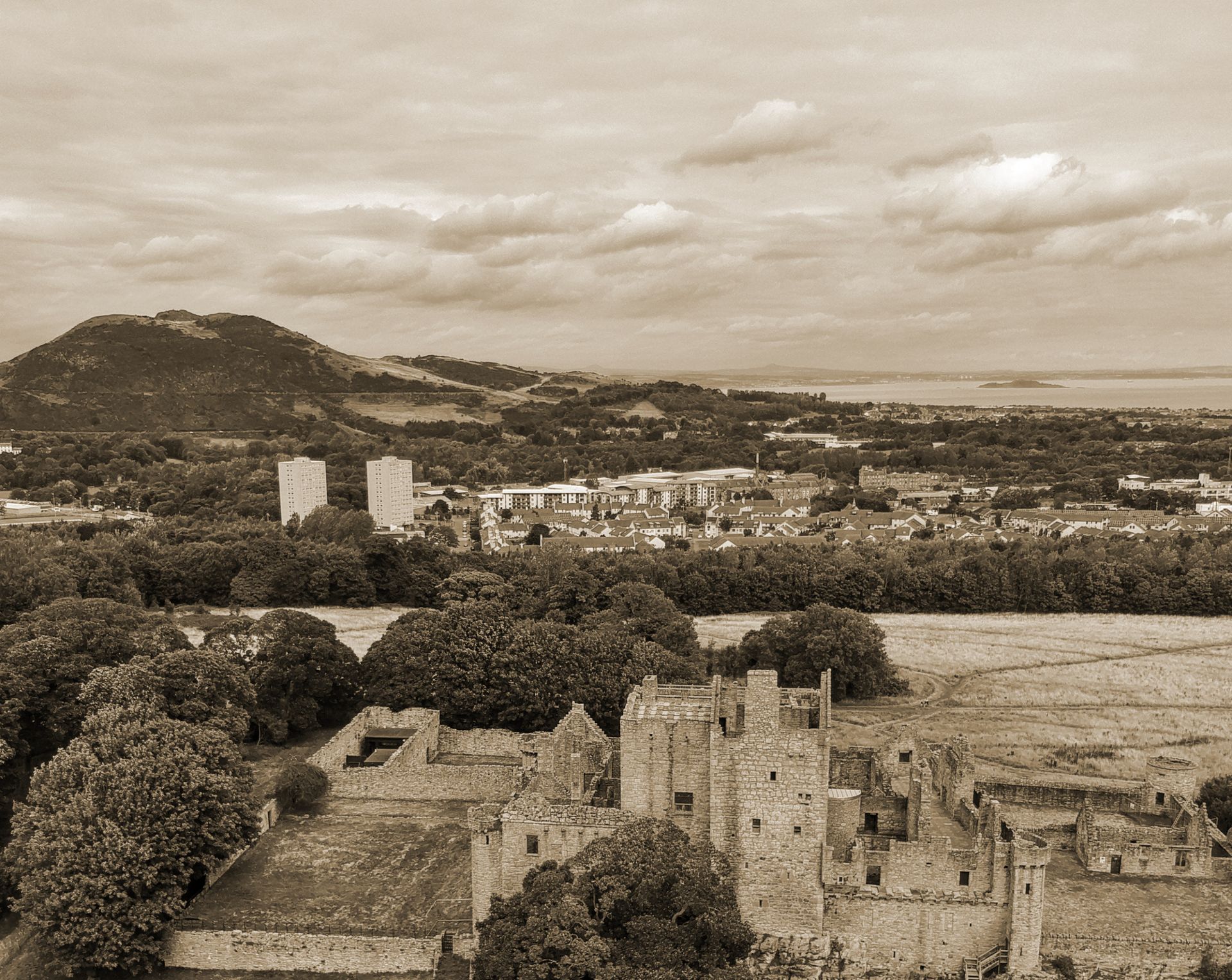
For the past year and a bit, I’ve been doing pro bono work in Craigmillar. It’s been a life enriching experience, and I’ve genuinely found the people and the place to be inspiring. As a child I’d be driven through Craigmillar with dad to visit ‘granny’ in Newcraighall. Coming from a fairly new council house in the Inch, even then Craigmillar looked tired and visiting Newcraighall was like stepping back in time. Indeed, the village was nearly abandoned completely by the council and only saved thanks to a campaign launched by the local councillor, David Brown. Granny, who was at school with Labour and council stalwart Jack Kane was the last resident in Third Avenue and died on the waiting list for a new house.
Roll forward to 1999 and I was Council Leader and the regeneration of Craigmillar was a huge challenge. The council had already been working with the local community to establish the Craigmillar Partnership and a formal delivery body, PARC (Promoting and Regenerating Craigmillar) was established in 2001. PARC worked with the local community to create a masterplan that became one of Scotland’s largest regeneration projects.
The early work of PARC was run by one of the smartest and most consequential figures in Edinburgh’s Modern economic renaissance, Ian Wall. Ian was Chief Executive of the Council’s property development company, EDI. Importantly, the investment had extensive input from the local community. That masterplan formed the basis of around £200million of investment and has been transformational.
Success is not something Edinburgh people often identify Craigmillar with, so let’s just run through some of the key achievements. The population has risen by 65% from hitting an all-time low of 11,000 in 2011. Unemployment has fallen from 22% in 1981 to 6% in 2022, a fall of 75%, and long-term unemployment has fallen by 80% to 1.5%. Life expectancy has risen dramatically and life expectancy for women is now in line with the Scottish average at 81, and the male figure has risen too, though not by as much – I’ll come back to that.
Crime has plummeted and if you rank Edinburgh council wards by crimes per thousand population, Craigmillar is in the bottom half of Edinburgh wards (9th of 17) and crime in Greater Manchester is 25% higher by the same measure.
Nobody thinks of Manchester as a high crime area, and Craigmillar deserves the same recognition. What my work in Craigmillar has shown me is that whilst I was confident the area would show transformation, it has exceeded even my expectations. Is it perfect? No. Is there more to be done? Certainly, but the task looking forward is very different and the way resources should be targeted has changed too.
I think there are three main lessons we need to learn about regeneration that need to be applied more widely in Scotland. Firstly, we need more research on the results of the huge investment there has been in regeneration areas. We know the intricate details of microscopic processes in human cells, and we’ve studied the farthest reaches of the universe, but our knowledge of what goes on in our poorest communities is vanishingly small.
Every year we get newspaper headlines screaming about how terrible life expectancy is in poor areas and every year I despair at how sloppy such analysis is. Firstly, such a finding is actually true. That is what the figures show, but there’s way more to the story. When you read a headline like that the assumption is that children and people living in such area will all live lives tragically cut short and in dire circumstances. However, the days when people mostly grew up and lived in one area are long gone.
Many people who grew up in Craigmillar have moved out of Craigmillar and many of those will have gone on to live long and healthy lives elsewhere. Ricky Nichol who created Commsworld, and Ian MacDonald of Ian McDonald Estates is another hugely successful former Craigmillar resident entrepreneur. Such people no longer live in Craigmillar, and their generally healthy lives help raise the figures in Edinburgh communities like Morningside and Murrayfield, or in many cases affluent communities further afield. And many people stay in Craigmillar and live long and healthy lives too.
At the same time, people move into Craigmillar, and because Craigmillar has such a high proportion of Edinburgh’s social housing it inevitably hosts people whose lives have been in crisis. That inevitably includes some people with drink and alcohol issues. Those people will almost never be rehoused in areas like the aforementioned Morningside and Murrayfield. The average age of a drug related death of a male – and drug deaths are overwhelmingly male in Scotland – is 45. It doesn’t take many of those to lower the average life expectancy in an area. This helps explain the fact that the gap in male life expectancy hasn’t narrowed to the same degree as it has for women.
One issue that historically shortens way too many lives is smoking. I have three brothers whose later lives have been seriously impacted by smoking. As drugs go it’s one of the most damaging there is. Growing up in a council estate, I was aware that smoking was seen as cool. I chose not to smoke, but many have. That cultural impact is huge, and we better understand how much impact lifestyle has on health. Yes, poorer communities have higher levels of smoking, but heavy smoking is one thing that drastically lowers the incomes of poorer people as well as shortening their lives. We need better health education to break that culture, combined with the new approach of ending tobacco sales to young people. Changing lifestyles will likely change life expectancy more than any economic measure.
The key lesson that we need to learn is that it’s lifestyle and not geography that primarily determines both lifespan and healthy living. Publishing such figures without recognising the complexity of these and other factors unfairly characterises every poor and regeneration area in the land. It’s likely that a large majority of people in poorer areas live long and healthy lives, but we don’t do the analysis.
The second lesson is that we need to focus more directly on town centre management in regeneration areas. The cleansing team in Craigmillar have done some amazing work in response to being asked to pay more attention to the public realm in Niddrie Mains Road in Craigmillar. The main road doesn’t just create the perception of the area for local people; it does so for everyone that passes through Craigmillar. Edinburgh has one of Scotland’s most successful City Centre Management Companies in Scotland – Essential Edinburgh. Another is being proposed for the city’s Old Town and that proposal is based on the success of Essential Edinburgh. There’s no equivalent policy focus on Craigmillar.
Research from Chicago, where an experiment (on environmental improvements of 150 vacant lots to create usable open space) showed that people were attracted to the improved spaces and crime, even gun crime, dropped as a result. When I was council leader and struggling to get a grip with how filthy the city was, I was approached by then Chief Executive (John Summers) of an amazing and hugely underrated environmental charity, Keep Scotland Beautiful. John told me the tale of Alness in the Highlands where a community ravaged by crime and drugs had turned itself around simply by establishing an Alness in Bloom Group run by volunteers. That focus on the appearance of the public realm changed Alness forever and for the good. Just outside Edinburgh there is the community of Tranent. Tranent didn’t have the issues faced by Alness, but the local Tranent Wombles have achieved a similar transformation of the community by ‘greening’ the town and collecting many thousands of bags of rubbish.
In Craigmillar, the Craigmillar and Niddrie Litterbusters have achieved a huge amount of progress in the local area. The group has transformed areas that were fly tipping blackspots, including where new housing is being built. The leader of the group – Miranda Baird, was specifically praised by the Prime Minister when he launched the Pride in Place funding. Miranda reckoned the work of the group – amongst many successes, has helped housebuilders sell more homes because the area around those new homes is so improved.
That’s almost certainly true, but the group doesn’t get any support from local housebuilders. It does get huge support from the council’s local cleansing team. We need to shift the focus in regeneration to improving public spaces and centres as a matter of priority. Craigmillar has a wealth of fantastic parks and public spaces. Little France Park is some of the best parkland in Scotland. It’s being looked after better than ever too, but local environment matters and we need to improve the quality of public spaces in regeneration areas.
Lastly, we need positive messaging about success. I wasn’t the guy who made Edinburgh economically successful – though I’d argue I more than played my part. What I was, was the guy who saw how successful Edinburgh was becoming and was able to communicate that fact. Indeed, people have forgotten what a backwater Edinburgh was in the 1980s, a time when the city only ever came alive for a few weeks each year. Our regeneration areas need the same kind of positive support and messaging to help change false perceptions and to ensure that the amazing work done in these communities is recognised.
The work I’ve seen has been inspiring. Organisations like Lyra, which is Scotland’s only performing arts venue for teenagers, is an amazing success. Sandy’s Community Centre has been at the centre of huge success in tackling the anti-social behaviour that arose in the community on November the 5th. The Venchie is an adventure play facility where kids can be active in a safe and secure environment and can have some of the best experiences of their young lives. That’s despite operating in a leaky and drafty building way past its sell by date and in desperate need of replacement.
Last and by no means least, the White House is a former pub which has been transformed into a successful community hub by long term activist Susan Carr and the Community Alliance Trust. The White House has a café where people can enjoy a coffee or a great meal in attractive surroundings. That’s something we take for granted in most town centres and is itself a huge contribution to making the area a more attractive place to spend time and linger. The work of council staff in the area is no less inspiring and cleansing manager Robert Farquhar, and his team have been doing some amazing work. Those running these facilities are heroes. People have had honours for less.
These people are heroes, but the need for such work goes on not least because there are more people in Craigmillar and too many face challenges and hardships in their lives. But we do need to change our approach to regeneration. Our universities should be queuing up to help analyse and learn the lessons from such areas. We have the record drug deaths, but we simply don’t study the areas that do the heavy lifting in trying to help and support many with drug and alcohol issues to turn their lives around.
Let’s bin the sloppy mythology about the lifespan in regeneration areas, focus on making the town centres and public spaces in those areas as attractive as possible to reduce crime and anti-social behaviour and so that people can enjoy them with confidence. Lastly, help those areas to gain recognition of how much they’ve improved and how they are better and, in many cases, great places they are to live. The perception is far too often worse than the reality, and we should just seek to raise the perceptions to match the new reality in Craigmillar and elsewhere.
Donald Anderson is Director of Playfair Scotland and a former Leader of Edinburgh City Council
7 comments
Stewart
The state of Edinburgh’s streets is “disgusting and disgraceful” and the city cleansing services need “root and branch reform. The streetscape in the Broughton and Bellevue areas of Edinburgh is in a parlous state.
The streets and road gullies in this largely residential area of a world-class city are dirty, strewn with litter, spillages from communal dustbins, leaves and detritus. Residents now enjoy the delightful display of ankle-high weeds growing out of footpaths and road gullies throughout the neighbourhood. On top of this, we all contend with broken and uneven paving stones in the locality…
I had such high hopes for improvements in street cleaning and the streetscape when Labour gained control of the City Council in the last local-government elections, only to be disappointed. Nothing changes!
Mirren
The council are awash with money and love spending public money , how much are the agencys making and what are they charging the council to what the agency worker receives . The amount of money and ‘man ‘ hours lost is unbelievable and what people get in the waste department would surprise the public .Their should be an independent investigation .
Peter Anderson
Weeds everywhere grass a mess everywhere looks dirty absolute disgrace. Goodness knows what tourists think.
Was in St Andrews recently. No weeds no rubbish everywhere clean it can be done with the right council.
Alan moon
Its time full time council workers not agency workers, were cleaning up the roads and pavements, Rose Street is like a roller coaster with all the dips on the road and pavements and it’s dirty, as for princes street broken slabs and uneven slabs more trip hazards really dangerous.
Grant
Over the years, I have repeatedly complained to the Council that two litter bins in Broughton need to be emptied on a daily basis during school term times: one at the corner of Melgund Terrace outside the convenience store and the other in Rodney Street. These requests have fallen on deaf ears – nothing changes. This city’s Council Tax payers are paying for Waste and Cleansing Services which are seriously deficient, with officials seemingly unresponsive to requests for improvement. Perhaps the Scottish Government should consider bringing in a Waste Management and Street Cleansing Commissioner to pull Edinburgh into the 21st century.
Bobby
A commonplace sight in Edinburgh these days. So many streets never weeded or clean up. A beautiful city that now looks a bit scruffy. Edinburgh Council task force management are not doing the basics.
rob t
visited Edinburgh for the festival in 2024. first time in 40 years. couldn’t believe how scruffy and grimy streets and buildings were. hope things might change…