


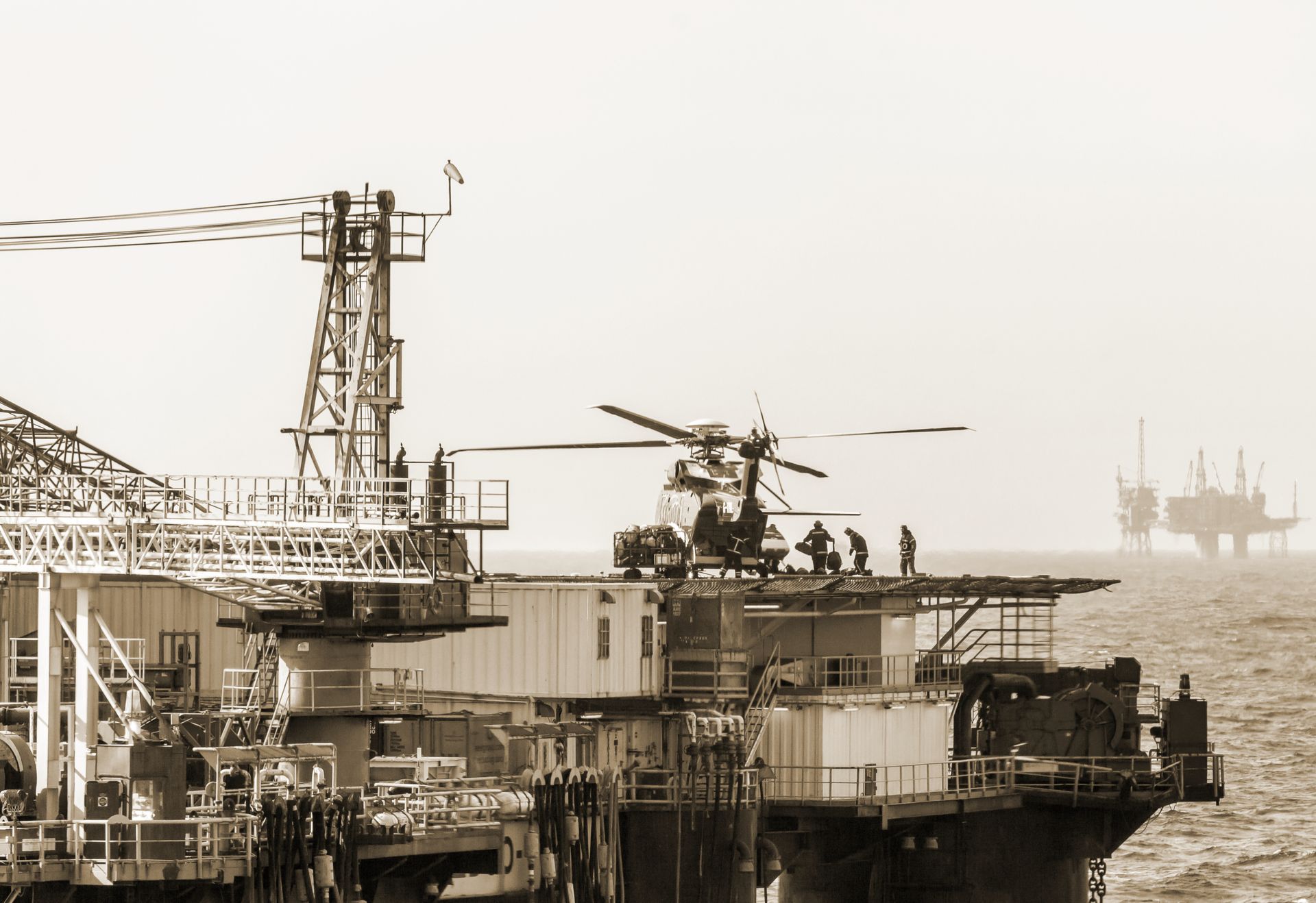
The current path for the decarbonisation of the Scottish economy mirrors previously waves of extractive capitalism. Crucially, this neo-liberal “green transition” leaves Scottish content and employment anaemic while simultaneously North Sea decline haemorrhages Scottish jobs. Without wholesale change in the economic and regulatory model Scotland will regrettably once again remain resource rich but impoverished.
The Scottish industrial economy has historically had a large extractive aspect. Coal dominated throughout the 19th and into the 20th century before collapsing in the 1980s. Oil and gas grew rapidly in the 1970s and is now in rapid decline. This starkly contrasts with the Norwegian equivalent where state investment and more effective longer-term stewardship and investment have delivered national prosperity and a world scale Wealth Fund.
The British State has a very long extractive history. Colonies delivered enormous quantities of resources (including enslaved people), and the British Empire on which “the sun never set” underpinned the growth of British prosperity and global clout for centuries. This went into decline by the mid- twentieth century and ended entirely by the 1970s. British membership of the European Union from 1973 eventually provided lucrative access to the world’s largest market and its associated governance rules until Brexit in 2020.
Inevitably post-Brexit successive British and Scottish governments have both turned away from Europe and struggled to grow. More than a decade of austerity post-2010 stripped out government investment, policy capacity and innovation.
In parallel a revolution in technology accelerated, transforming how people communicate, earn a living, understand the world around them, are governed/surveyed, spend leisure time. Less than ten gigantic tech corporations grew at an unprecedented pace, generating unprecedented wealth, particularly for the owners. These companies are now larger than many countries and wield enormous economic and political clout. They are lightly/unregulated. Deeply embedded into all aspects of our life and governance. Their tools provide incredible benefits in terms of AI learning and incredible danger when wielded against people by autocracies. Underpinning these corporations is a highly sophisticated and voracious extractive model. Extractive in terms of data, in terms of costs, and in terms of materials (rare earths, energy, water, land). In addition, the mission of the larger US-based corporations is unstintingly backed by the US Government. This primarily means aggressive hostility to foreign regulation and taxation.
All of this is played out against the backdrop of the global climate crisis. A crisis which threatens the entire fabric of modern human life. For all of us. One response to the carbon crisis has been a global effort to decarbonise. Substituting electrification via renewable energy sources for legacy carbon-based fuels. Scotland is inevitably at the forefront of this due to our large but rapidly shrinking legacy oil and gas industry and our abundant capacity (wind, land, waves) to generate renewable power. Scotland also has strong economic ties to England which is in energy deficit and therefore a prime market for e.g. Scottish electricity exports.
Unlike Norway, the role of the state in energy in the UK and Scotland is minimal. “Light touch” regulation within a private sector neo-liberal economic system. The power grid is one of only two globally (with Chile) that is privatised. The oil and gas sector is entirely in private hands. Likewise, renewables where projects are prosecuted by private industry. Nuclear differs slightly in that investors are private (or like EDF partially foreign state owned) while the UK Government underwrites the key risks in terms of cost and revenue.
The entire system is oriented towards maximising value and minimising risks for investors, many foreign (including sovereign wealth funds, private equity and state actors). The renewables sector primarily follows the same neo-liberal model as oil and gas. In anticipating the future for renewables/nuclear the UK oil and gas sector is a strong analogy. Headlong, private sector “boom” development and exploitation, mostly lacking integrated planning with the key players being private investors rather than consumers or wider societal stakeholders. Norway’s oil and gas history, with near identical geology, has been State-led, long-term oriented and underpinned by a “Norway first” philosophy in terms of revenue, supply chains, employment and partnerships. Electrification of the UK and Norwegian economies shows similar patterns.
The growth in renewables, like UK oil and gas beforehand, is “market led”. The absence of integrated planning of generation (e.g. windfarms) and distribution (the grid) has resulted in huge expensive bottlenecks for projects and massive compensation payments passed on to consumers when oversupply cannot be accommodated. Consumers pay some of the highest energy costs in Europe. Scottish communities bear the brunt of the onshore footprint while receiving pitifully small “benefits” and having to fight “David and Goliath” battles with better funded developers. Crucially the “green narrative” is technocratic, often patronising in tone, and has failed to build truly broad support, particularly amongst centre-right voters. The key weakness lies in the inability to connect the neo-liberal economic model with growing net employment, material community benefits and above all energy affordability.
Into this mix comes a massively expanding demand for land, water and above all power, for tens and perhaps hundreds of mega data centres. These are primarily, but not exclusively, catering for AI “pull”. It is unclear how many will be credibly matured and constructed but it is likely to involve the consumption of multiples of today’s Scottish renewable production capacity. These will “blow” the Scottish net zero plan. They will distort the electricity market. They have already caused massive uplift locally in water costs in the US. They will require hugely expanded renewables construction. There is plenty of speculation to suggest that they will also be used as the justification, by Westminster, for costly new nuclear in Scotland. They will put enormous pressure on Scotland’s currently “abundant” resources (land, water, energy capacity) potentially causing them to become ever rarer and ever more expensive.
All of this will have severely negative consequences for ordinary Scots. As consumers. As community neighbours. As citizens hoping to have a fair share of national wealth. Or a sustainable environment. And it’s not likely “Manchesterism” will make one iota of difference to this trajectory. The longer we carry on, with sunk private costs growing ever larger, and local council liabilities growing ever more, the more costly it will be to reverse.
I fully support the drive towards electrification, but I am struck by how joylessly technocratic it all is. Construction historically was often a source of local and national pride. The launch of the Clyde-built QE2 in 1967. The Norwegian-built giant Troll gas platform installed in 1996. Live streamed for days on national TV as it sedately made its way to its site over the field. Norwegians knowing that decades of thousands of high-quality jobs and tens of billions in State revenue were to follow. The New Zealand Pohokura gas field modules, locally built in New Plymouth, in 2006 being towed past cheering crowds en route to installation. “We built that” repeatedly. Jobs. Wages. Pride. Impact. Benefits for us.
It’s unfair to compare solar panels with Troll, but nonetheless, the near absence of Scottish content in large-scale wind fabrication is striking. Today I can see multiple huge yellow Chinese built wind turbine substructures in Leith. It’s the norm to build them abroad. In China. In Denmark. In Germany. As quality Scottish jobs drain from the North Sea in their many tens of thousands, a fraction is available in the green transition.
The extreme example of this “otherness” is the mega data centre. Costing billions. Entirely procured from abroad. By necessity sitting within secure “blank” guarded sites. Draining gigantic quantities of power and often water. Emitting huge quantities of heat (and other emissions when periodically switched to hundreds of back-up generators). Employing handfuls of locals, mainly in unskilled roles. Squatting in the Scottish landscape like an occupying army, hunkered down behind fences and gates. Tearing communities apart. Looming over ill-equipped local authorities like a UFO.
Likewise nuclear. “Great British Nuclear” announces Scotland possesses land areas with “high potential” for new nuclear developments. Scottish Labour threatens to “park nuclear tanks” on Scottish lawns “the day after the Scottish elections”. It’s hardly the QE2. Or Troll.
Where are we Scots in all this? Where are the jobs for our sons and daughters? Where are the lower bills? The better-quality homes? The renewed schools and hospitals funded by this “green bounty”? The adjacent communities able to invest in themselves for the future? The energy security? The flow of “good news” from Westminster is jarringly at odds with real life across Scotland.
The Scottish Government largely sits on the sidelines. Industry and energy/infrastructure strategy is absent or emaciated. The SNP is strong on rhetoric but pitifully weak on action, not least in support of the hundreds of local communities for whom new infrastructure is an unwanted reality without any material benefits, direct or indirect.
This “new age of extraction” is underpinned by several “conditions precedent”:
- Prolongation of the British neoliberal economic model
- Light touch regulation
- Westminster and Holyrood acting as “hand maidens” for private industry not as guardians of the population
- Unlimited Government access for private lobby groups/corporations
- Planning regulation, permitting, right to protest all weakened.
- Communities left to fight (and inevitably lose) battles with private developers. Private corporations using commercial and legal levers with few restrictions
- Scotland being treated primarily as a “resource province” to be exploited
- Rapid monetisation and exploitation taking precedence over any sustainability aspects
- Water, land, licences, power open to the highest bidder
- Minimal conditions regarding Scottish content or value
All these conditions exist today. Or are falling into place.
Yet there is an alternative…” Scotland First” if you like…where the needs of the 5.6 million of us are paramount, and developers can still successfully build large-scale new infrastructure. Where we shift from “foreign transplant and extraction” to “Scots built. Delivering for all Scots”. This requires a completely new operating and governance model:
- The systematic dismantling of the British neoliberal economic model
- Targeted regulation with the Scots people as the overriding priority
- Westminster and Holyrood acting as guardians of the people’s interests. Eventually with Holyrood as the singular authority post-independence
- Assertively managed and limited Government access for private lobby groups/corporations
- Planning regulation, permitting, right to protest all renewed
- Communities fully supported in dealing with private developers. Private corporations commercial and legal levers limited
- Scottish resources managed and carefully developed to maximise value to Scotland
- All development planned on an integrated basis. Delivered at a sustainable pace driven by Scottish national needs
- Water, land, licences, power are managed for the longer-term
- Maximise conditions regarding Scottish content and value. Relentlessly support Scottish providers (including making access to foreign investors contingent upon upskilling Scottish firms)
It’s simply extraordinary that as currently planned and executed, we Scots will (yet again) be resource rich and impoverished. Our energy bills won’t fall. Our hospitals and schools won’t be rebuilt. Our communities won’t be more liveable. Our environment less nature denuded and degraded. Our political institutions won’t be strengthened. Nor our local authorities.
We won’t end up like the Norwegians. Or the Qataris. Or the Danes. Our kids won’t get to work in building or operating all this new infrastructure. We won’t receive dividends or tax relief from “the bounty”. Our electricity exports to England may end up costing us for the “privilege”. Despite our self-sufficiency in all these wonderful resources and being endlessly told how lucky we are, Scotland is built upon a system that does little but exploit and impoverish us for the benefit of the actual “lucky few”.
This is probably the last round in a centuries old battle for who controls Scottish resources and future prosperity. It’s another “David vs Goliath” struggle. Of course it is. I am just not convinced that the Scottish Government is interested in even getting into the ring. Never mind squaring up to Westminster. To private interests. To take on the neo-liberal extractive system. To go the hard yards the Norwegians did in the 1970s. Who voted for Ministers as extractive secretive handmaidens? Who voted to put hundreds of communities in the firing line? Who voted for jingoistic slogans rather than hard graft? To boost Chinese manufacturing?
Samuel Johnson once wrote “What enemy would invade Scotland, where there is nothing to be got?”. It turns out there is plenty to “be got”. But nobody needs invade to extract it. If we continue along this cursed path, when it’s not too late to alter it, we will regret it for decades. And I doubt we will ever forgive those that stood by and let this happen.
Neil Gilmour is a former energy industry senior executive who led multiple successful world-scale projects and highly complex commercial negotiations.