


Our national mathematics curriculum is suffering from a structural collapse, and the root of this crisis is a flawed blueprint mandated from above. We have fashioned an educational roadmap that prioritises doing and calculating while largely omitting the why: the rigorous, analytical scaffolding of mathematical proof. This is not merely a pedagogical preference. It is a constitutional failure. It is an intellectual fraud engineered by Qualifications Scotland (formerly the SQA) and Education Scotland.
To grasp the gravity of this, we must strip away the academic jargon. What is proof? It is a word that often scares laypeople. It conjures images of chalkboard dust and impenetrable symbols. But it shouldn’t. Simply put, proof is the machinery of truth. In a world increasingly dominated by fake news, spin, and subjective opinion, mathematics offers the only sanctuary where we can be absolutely certain. Forever.
A mathematical proof is a logical narrative. It is a step-by-step argument that guarantees a statement is not merely true for the numbers you have tested, but true for every number that will ever exist. It differs from a guess because it provides a justification that never expires. By removing this from the curriculum, we blunt our sharpest intellectual tool. We deny our children the ability to distinguish fact from mere conjecture.
Critics often argue that this level of rigour is too abstract for young minds. They say it belongs only in universities. I fundamentally disagree. Proof is not about complex algebra; it is about logical thinking. It can definitely be taught in primary school. Let me provide an example that any primary teacher in Scotland could use tomorrow.
Imagine a class learning about odd and even numbers. We don’t need equations or confusing textbooks. We can use Numicon tiles (or simple interlocking plastic cubes). We define an odd number as a shape with a ‘bobbly bit’ sticking out at the top, a pair of columns where one is one block shorter than the other. We define an even number as a shape with a flat top.
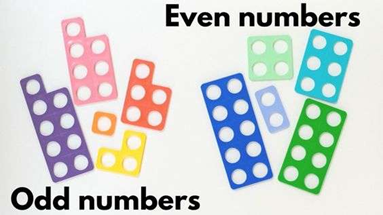
Pupils are asked to prove that an odd number plus an odd number always equals an even number. They take two different odd pieces, say, the 3-shape and the 7-shape. They push them together. They see that the two bobbly bits slot together perfectly, like a lock and key. They create a shape with a flat top: an even number. They try it with 5 and 9, or 1 and 11. It works every time. The odd parts cancel each other out, leaving a flat, even block.
This example illustrates the foundational precursors to formal proof. Through this tactile experience, the child grasps a universal truth. They haven’t just done a sum. They have proved a theorem both visually and logically. They are doing the work of mathematicians. Withholding this opportunity deprives them of the intellectual dignity of true discovery.
In a robust new study, I surveyed 407 secondary mathematics teachers, and a troubling reality emerged. For the vast majority of practitioners, proof has become a gilded feature reserved only for the highly able.
But let me be clear: the teachers are not the ones resisting this. My data shows that teachers want to teach this and value it. By failing to embed deductive reasoning at the heart of BGE (Broad General Education), however, the regime has hollowed out the subject. This foundational void is reflected in the steady erosion of our international standing. Since 2006, Scotland’s PISA mathematics scores have plummeted from 506 to 471. This is not a dip; it is a slide. This decline is corroborated by the 2023 OECD PISA Mathematics Framework, which identifies mathematical reasoning as the single most important skill for the 21st century.
While nations like Estonia treat proof as the pulse of a coherent syllabus, our national assessment model has relegated it to a niche interest. By removing the requirement to prove in national exams, the apparatus has incentivised a culture of ‘formula hunting.’ It prizes optics and pass rates over genuine mastery.
Emeritus Professor Lindsay Paterson has long criticised the vagueness of the CfE’s Experiences and Outcomes. He is right. He argues that they fail to provide a structured map for pupils. My own experience on the ground confirms his fears. His analysis suggests that by replacing a clear hierarchy of knowledge with a generalised mist of skills, the charter abandons the formal mechanisms that allow children from less privileged backgrounds to compete. This is about fairness. Without the sturdy ladder of a knowledge-rich programme, the gap between the advantaged and disadvantaged only widens. Instead of structure, we have created a bourach.
The systemic rupture is built into our qualification framework. Currently, formal instruction in proof is almost absent from National 5 and Higher. This creates a devastating cliff edge. Young people spend years navigating a syllabus built on rote application, only to hit a wall of formal logic in Advanced Higher.
It is equivalent to asking a pupil to build the Forth Bridge after being taught only how to paint the rivets. This precipice is not a failure of ability; it is an artificial construct of curriculum design. It is educational negligence.
The implications are economically profound. By depriving the BGE of formal proof, we are systematically failing to prepare a future generation of mathematicians, physicists and engineers. If Scotland wishes to remain a high-tech economy, we cannot continue treating logic as a luxury for the few. Furthermore, the inclusive design of CfE has ironically led to an exclusionary practice. My findings show that while 95% of teachers believe proof is fundamental, fewer than half feel they can deliver it under the current constraints. They are being asked to build a house without bricks.
However, in the perennial debate about Scotland’s declining mathematics standards, the finger of blame is often unfairly pointed at classroom delivery. There is a lazy narrative suggesting that schools have lost their way or that teachers are simply not working hard enough. I am here to tell you that this is false. The colleagues I work alongside in Fife are among the most committed professionals I have ever met, performing daily miracles with resources that would make a magician weep. They are heroes in a broken machine.
Reflecting on these findings, I offer this conclusion:
Think about who we are. We are the nation that punched above its weight for centuries. We gave the world Hume’s fierce logic, Smith’s systematic thinking, and Maxwell’s unified theory. We built the modern world on Scottish intellect. So why are we now content to settle for mediocrity? Why are we training our children to be human calculators rather than thinkers?
We champion inclusion yet restrict the engine of mathematics, logical proof, to the few. As Burns observed, ‘facts are chiels that winna ding’; truth is immutable. Genuine inclusion demands that we trust every bairn with the dignity of rigorous reasoning, not merely the most able. My research indicates that teachers are prepared to lead this renaissance. We must cease underestimating Scotland’s potential. The ability to distinguish between absolute truth and conjecture is the ultimate empowerment. It is our dùthchas, our native heritage, and it belongs to us all.
Paul Argyle McDonald is a retired Chartered Teacher of Mathematics who works as a supply teacher for Fife Council. He is a former member of the Scottish Mathematical Council.